 Oil-soaked Brown Pelican
Monday, June 14, 2010


Gulf Oil Disaster Congressional Hearings
There are nine hearings.


1) House Energy and Commerce Subcommittee on Energy and Environment: Oil Majors CEO's Discuss America's Energy Future – BP's Lamar McKay along with Rex Tillerson of ExxonMobil, Chevron CEO John Watson, ConocoPhillips chief James Mulva and Shell President Marvin Odum for a hearing entitled "Drilling Down On America's Energy Future: Safety, Security And Clean Energy. Tues June 15 at 9:30 a.m.
2) House Natural Resources Subcommittee on Insular Affairs, Oceans and Wildlife: Limits of Ocean Science and Data – examines ocean science and data limits - the hearing will explore whether NOAA and Fish and Wildlife Service (FWS) have the resources to respond. The hearing is Part 4 of a 7-part Deepwater series (see below for Thursday's installment). The first panel includes Acting NOAA Assistant Administrator David Kennedy, U.S. Geological Survey Director Marcia McNutt, and Merv Fingas of the National Research Council's Committee on Oil in the Sea. Panel 2 features five academic specialists in marine and environmental sciences. Tues June 15 10:00 a.m.
3) Senate Health, Education, Labor and Pensions Committee: Full committee hearing on evaluating the health impacts of the Gulf of Mexico oil spill. This and the House hearing will focus on the use of chemical dispersants potential health risks to cleanup workers, fishermen and other Gulf Coast residents. Tues June 15 2:30 p.m.
4) House Energy and Commerce Subcommittee on Health: Examines HHS Response – holds a hearing on Health and Human Services' actions to identify and address health effects of the BP oil spill. Wednesday June 16 at 2:00 p.m.
5) Senate Homeland's Federal Financial Management, Government Information, Federal Services, and International Security Subcommittee holds a hearing on looking at the financing of recovery from the Gulf of Mexico oil spill. Witnesses include BP's Darryl Willis, Transocean's Steve Newman, Craig Bennett of the U.S. Coast Guard's National Pollution Funds Center and Susan Fleming, director of physical infrastructure issues of the Government Accountability Office. Wednesday June 16 at 3:00 p.m.
6) House Natural Resources Committee's panel on Energy and Mineral Resources: MMS Regulatory Effectiveness Reviewed – will hold a hearing looking at the record of the Minerals Management Service and current regulations. The hearing is part 5 of 7. Thursday June 17 at 10:00 a.m.
7) House Energy and Commerce Subcommittee on Oversight and Investigations: will host BP CEO Tony Hayward on Thursday at 10:00 a.m.
8) House Transportation Looks at Foreign Vessels – The House Transportation and Infrastructure Subcommittee on Coast Guard and Maritime Transportation convenes Thursday at 2 p.m. to investigate foreign vessel operations in the U.S. exclusive economic zone. The hearing will look at foreign-flagged vessels and the what role they may play
9) Senate Small Business Committee: To look at Assistance for Gulf Small Businesses –to explore the evaluation process of small business proposals for oil spill cleanup efforts. Thursday June 17 at 10:00 a.m.
(Source: Frank Maisano)
Gulf of Mexico Disaster By The Numbers
QUICK FACTS
June 10, 2010
$3,500,000,000: Cost of cleanup of Exxon Valdez spill, with another $5 billion in lawsuits and settlements.
$2,400,000,000: Estimated annual economic impact of Louisiana seafood production.
37,691,000: Gallons spilled (day 51) based on high range of government estimates.
11,000,000: Number of gallons spilled by Exxon Valdez.
3,645,000: Gallons collected from Deepwater Horizon Oil Spill site as of June 9, 2010.
30,000: Number of claims made to BP (through contractor ECIS) by individuals and businesses for lost income or damages.
19,000: Number of claims paid by BP (through contractor ECIS) to individuals and businesses for lost income or damages.
19,000: Estimated barrels of oil per day (12,000 - 19,000) shooting out of 2 leaks the bent and broken pipes at the Deepwater Horizon Oil Spill site.
18,000: Number of checks issued by BP as of June 7, 2010, totaling $49 million. Average $2,720 per check.
1,900: Number of people employed in Louisiana in the frozen fish and seafood industries. 2,300 people are employed in the seafood canning industry. This totals 25% of the food manufacturing industry in Louisiana (17,000 people).
1,500: Number of Coast Guard reservists mobilized and moved to positions in Louisiana and elsewhere on the Gulf Coast as part of President Barack Obama’s promise to triple the manpower fighting the Deepwater Horizon oil release.
700: Number of individuals hired by ECIS operating in 25 offices on the Gulf Coast by BP contractor, ECIS to handle individual and business lost income or damages claims.
400: Number of species that live in the Louisiana’s islands and marshlands, including gulls, pelicans, roseate spoonbills, egrets, terns, and blue herons.
322: Number of sea turtles pulled out of the Gulf since the oil spill began. 50 were alive; 272 were dead, and 3 have been released, according to the Unified Area Command compilation from various sources.
134: Number of years P&J Oyster Company has been in business. As of June 10, 2010, company has shut down shucking operations.
80%: Business volume decrease at Bridge Side Marina in Grad Isle, Louisiana, owned by Buggie Vegas.
67: Number of oil spill workers treated since May 31, according to West Jefferson Medical Center, which has a first aid tent at Grand Isle. 98% of the workers seeking aid are because of the heat. 105 -110 is the Heat Index reported by the National Weather Service in Grand Isle.
42: Number of gallons in one barrel of oil.
21: Total number of payment of more than $5,000 paid by BP to Louisiana individuals or businesses.
17: Number of the deepwater drilling rigs in Louisiana waters that have pulled up their drills in the first week of the moratorium.
11: Number of men who died in the explosion on April 20, 2010 at the BP.
5: Species of Gulf sea turtles that face grave danger due to oil spill. All of the gulf sea-turtle species are already endangered because the oil spill threatens their population at every state of life, according to Oceana, an international organization for ocean conservation.
3: Number of the 6,100 claims paid by BP in Louisiana larger than $5,000, according to Curt Eysink, executive director of the Louisiana Workforce Commission.
0: Number of the 6,100 claims paid by BP in Louisiana larger than $10,000, according to Curt Eysink, executive director of the Louisiana Workforce Commission.
(Communities Living On The Horizon, Louisiana Justice Institute: Quick Facts About the Spill)
June 10, 2010
$3,500,000,000: Cost of cleanup of Exxon Valdez spill, with another $5 billion in lawsuits and settlements.
$2,400,000,000: Estimated annual economic impact of Louisiana seafood production.
37,691,000: Gallons spilled (day 51) based on high range of government estimates.
11,000,000: Number of gallons spilled by Exxon Valdez.
3,645,000: Gallons collected from Deepwater Horizon Oil Spill site as of June 9, 2010.
30,000: Number of claims made to BP (through contractor ECIS) by individuals and businesses for lost income or damages.
19,000: Number of claims paid by BP (through contractor ECIS) to individuals and businesses for lost income or damages.
19,000: Estimated barrels of oil per day (12,000 - 19,000) shooting out of 2 leaks the bent and broken pipes at the Deepwater Horizon Oil Spill site.
18,000: Number of checks issued by BP as of June 7, 2010, totaling $49 million. Average $2,720 per check.
1,900: Number of people employed in Louisiana in the frozen fish and seafood industries. 2,300 people are employed in the seafood canning industry. This totals 25% of the food manufacturing industry in Louisiana (17,000 people).
1,500: Number of Coast Guard reservists mobilized and moved to positions in Louisiana and elsewhere on the Gulf Coast as part of President Barack Obama’s promise to triple the manpower fighting the Deepwater Horizon oil release.
700: Number of individuals hired by ECIS operating in 25 offices on the Gulf Coast by BP contractor, ECIS to handle individual and business lost income or damages claims.
400: Number of species that live in the Louisiana’s islands and marshlands, including gulls, pelicans, roseate spoonbills, egrets, terns, and blue herons.
322: Number of sea turtles pulled out of the Gulf since the oil spill began. 50 were alive; 272 were dead, and 3 have been released, according to the Unified Area Command compilation from various sources.
134: Number of years P&J Oyster Company has been in business. As of June 10, 2010, company has shut down shucking operations.
80%: Business volume decrease at Bridge Side Marina in Grad Isle, Louisiana, owned by Buggie Vegas.
67: Number of oil spill workers treated since May 31, according to West Jefferson Medical Center, which has a first aid tent at Grand Isle. 98% of the workers seeking aid are because of the heat. 105 -110 is the Heat Index reported by the National Weather Service in Grand Isle.
42: Number of gallons in one barrel of oil.
21: Total number of payment of more than $5,000 paid by BP to Louisiana individuals or businesses.
17: Number of the deepwater drilling rigs in Louisiana waters that have pulled up their drills in the first week of the moratorium.
11: Number of men who died in the explosion on April 20, 2010 at the BP.
5: Species of Gulf sea turtles that face grave danger due to oil spill. All of the gulf sea-turtle species are already endangered because the oil spill threatens their population at every state of life, according to Oceana, an international organization for ocean conservation.
3: Number of the 6,100 claims paid by BP in Louisiana larger than $5,000, according to Curt Eysink, executive director of the Louisiana Workforce Commission.
0: Number of the 6,100 claims paid by BP in Louisiana larger than $10,000, according to Curt Eysink, executive director of the Louisiana Workforce Commission.
(Communities Living On The Horizon, Louisiana Justice Institute: Quick Facts About the Spill)
Jordan Wants To Build Commercial Nuclear Power Plants
There are no operating commercial nuclear power plants in the Middle East. Iran's Bushehr plant could come online soon if the Israelis do not bomb it. India has 8 commercial nuclear plants and India has 8 commercial nuclear power plants.
 The Kingdom of Jordan wants to build nuclear power plants and is negotiating a nuclear-cooperation agreement that would allow American firms to export nuclear components and know-how. The U.S. is demanding that Jordan not produce its own nuclear fuel. Jordan is allowed to produce its own nuclear fuel as a signatory to the United Nations Nonproliferation Treaty (NPT) and is reluctant to surrender that right. Jordan recently discovered big deposits of uranium ore. The discovery outside of Amman was made in 2007 and the deposit is estimated to be at least 65,000 tons of uranium ore.
Jordan is 95% dependent on imported oil and has among the world's smallest reserves of potable water. The Center promotes utilizing commercial nuclear power for desalination. Jordan hopes to use its projected four nuclear power plants to begin exporting electricity to neighbors including Iraq and Syria by 2030 and to commercially mine and export uranium. The Jordan Atomic Energy Commission is located in Amman, the capital of Jordan.
Jordan's King Abdulla
 The U.S. prefers that Jordan would not process any nuclear fuel itself, but could still produce and export electricity by buying the fuel for its reactors on the international market. U.S. officials argue if Jordan doesn't surrender its rights to produce fuel, it raises proliferation risks. Countries with the complete nuclear fuel cycle—from mining uranium to processing it into fuel—can convert their civilian plants for military applications. Such fears could hamstring Washington's ability to win necessary Congressional approval for a nuclear cooperation agreement with Jordan. Last year, Congress approved a similar deal with the United Arab Emirates only after the country agreed to buy its nuclear fuel overseas. Under terms of the U.S. agreement, Jordan could mine the ore but not convert it into fuel for nuclear power. Jordan could pursue its nuclear ambitions without the U.S., but would face steep diplomatic and financial hurdles.
The U.S. is a member of the Nuclear Suppliers Group, a Vienna-based body aimed at controlling the flow of nuclear technologies internationally. Many reactors from France, Japan and Canada contain significant U.S. components and would require Washington's approval for a sale. (WSJ, 6/12/2010, Power Plants Around the World)
 The Kingdom of Jordan wants to build nuclear power plants and is negotiating a nuclear-cooperation agreement that would allow American firms to export nuclear components and know-how. The U.S. is demanding that Jordan not produce its own nuclear fuel. Jordan is allowed to produce its own nuclear fuel as a signatory to the United Nations Nonproliferation Treaty (NPT) and is reluctant to surrender that right. Jordan recently discovered big deposits of uranium ore. The discovery outside of Amman was made in 2007 and the deposit is estimated to be at least 65,000 tons of uranium ore.
Jordan is 95% dependent on imported oil and has among the world's smallest reserves of potable water. The Center promotes utilizing commercial nuclear power for desalination. Jordan hopes to use its projected four nuclear power plants to begin exporting electricity to neighbors including Iraq and Syria by 2030 and to commercially mine and export uranium. The Jordan Atomic Energy Commission is located in Amman, the capital of Jordan.
Jordan's King Abdulla
 The U.S. prefers that Jordan would not process any nuclear fuel itself, but could still produce and export electricity by buying the fuel for its reactors on the international market. U.S. officials argue if Jordan doesn't surrender its rights to produce fuel, it raises proliferation risks. Countries with the complete nuclear fuel cycle—from mining uranium to processing it into fuel—can convert their civilian plants for military applications. Such fears could hamstring Washington's ability to win necessary Congressional approval for a nuclear cooperation agreement with Jordan. Last year, Congress approved a similar deal with the United Arab Emirates only after the country agreed to buy its nuclear fuel overseas. Under terms of the U.S. agreement, Jordan could mine the ore but not convert it into fuel for nuclear power. Jordan could pursue its nuclear ambitions without the U.S., but would face steep diplomatic and financial hurdles.
The U.S. is a member of the Nuclear Suppliers Group, a Vienna-based body aimed at controlling the flow of nuclear technologies internationally. Many reactors from France, Japan and Canada contain significant U.S. components and would require Washington's approval for a sale. (WSJ, 6/12/2010, Power Plants Around the World)
Relief Wells
Click on image to enlarge
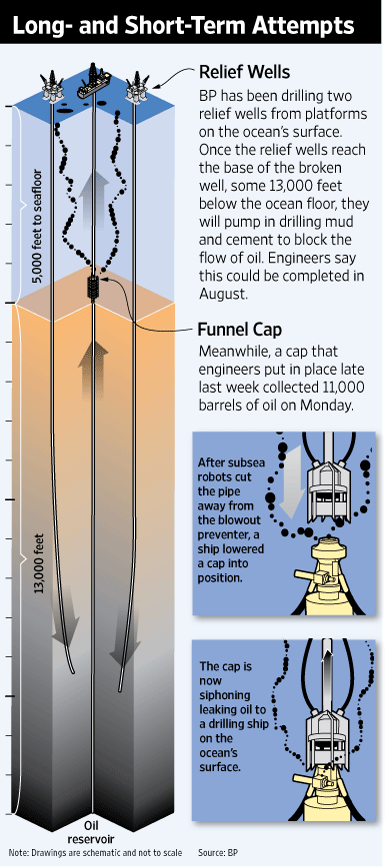
 A drilling rig drills a relief well or second well to intersect the original, flowing well as deeply as possible. A specialized heavy liquid is then pumped into the flowing well to bring it under control. This liquid is denser than oil and so exerts pressure (known as hydrostatic pressure) to stem the flow of oil.
Once the flow is stopped, the well can be returned to a safe condition. Drilling a well of this nature presents many technical challenges to ensure that the flowing well is intersected in the right position and that the fluid pumping operations are effective.
The Obama administration insisted that BP drill a second relief well in case there were problems with the first well. It is anticipated that the wells will be completed sometime in August or September. Relief wells of this type usually work, but critics state that there is no guarantee that the relief wells will work. The Center is recommending that two relief wells should be included with drilling at the 33 pending deepwater wells currently under a 6-month stop-work moratorium. The moratorium should be lifted. The Center opposes expanded offshore drilling. (BP)
A drilling rig drills a relief well or second well to intersect the original, flowing well as deeply as possible. A specialized heavy liquid is then pumped into the flowing well to bring it under control. This liquid is denser than oil and so exerts pressure (known as hydrostatic pressure) to stem the flow of oil.Once the flow is stopped, the well can be returned to a safe condition. Drilling a well of this nature presents many technical challenges to ensure that the flowing well is intersected in the right position and that the fluid pumping operations are effective.
The Obama administration insisted that BP drill a second relief well in case there were problems with the first well. It is anticipated that the wells will be completed sometime in August or September. Relief wells of this type usually work, but critics state that there is no guarantee that the relief wells will work. The Center is recommending that two relief wells should be included with drilling at the 33 pending deepwater wells currently under a 6-month stop-work moratorium. The moratorium should be lifted. The Center opposes expanded offshore drilling. (BP)
Saturday, June 12, 2010
Center Establishes Criteria for Hydraulic Fracturing
Center Criteria for Evaluating Hydraulic Fracturing Projects
 The Center has developed criteria for evaluating hydraulic
fracturing projects.
The Center has developed criteria for evaluating hydraulic
fracturing projects.
The Center utilizes each criterion, combined with development project criteria, in determining whether it will support specific fracking projects.
1) Project not within 5 miles of a community underground or surface drinking water source.
2) Project is within 5 miles of a community underground or surface drinking water source.
3) Property owners dependent upon ground or surface water drinking supplies in 5 mile zone sign support letter for project.
4) Offer free well testing to any well owner within the 5 mile zone.
5) Publish U.S. Geological Survey (USGS) aquifer information.
6) Disclose chemical constituents (but not proprietary chemical formulas) used in fracturing process.
7) Voluntary agreement posted on corporate governance to disclose proprietary chemical formulas or specific chemical identity to physician in the event of a medical emergency (with appropriate confidentiality protections).
8) Utilize less toxic or nontoxic substitute chemicals.
9) Complete containment of all drilling wastes within flowback water handled at the well pad.
10) Reasonable buffer between well pad and flowback containment and any surface water body.
In addition to these criteria specifically targeted to hydraulic fracturing projects, the Center also has general criteria for supporting or opposing development projects.
Center Criteria For Supporting or Opposing Development Projects
 1. Is the project environmentally damaging?
2. If the project is environmentally damaging, is the damage significant?
3. Does the project promote sprawl?
4. Does the project harm vulnerable communities?
5. Is the project outside of a smart growth area?
6. Does the project cause economic disadvantage or have any negative or biased economic consequences?
7. Are there many environmentally damaging projects in the area?
8. Do the majority of residents in the region oppose the project?
9. Does the political decision-making body oppose the project?
10. Do environmental groups oppose the project?
The project is eligible for Center support if seven of the ten questions receive a 'no' answer.
 The Center has developed criteria for evaluating hydraulic
fracturing projects.
The Center has developed criteria for evaluating hydraulic
fracturing projects. The Center utilizes each criterion, combined with development project criteria, in determining whether it will support specific fracking projects.
1) Project not within 5 miles of a community underground or surface drinking water source.
2) Project is within 5 miles of a community underground or surface drinking water source.
3) Property owners dependent upon ground or surface water drinking supplies in 5 mile zone sign support letter for project.
4) Offer free well testing to any well owner within the 5 mile zone.
5) Publish U.S. Geological Survey (USGS) aquifer information.
6) Disclose chemical constituents (but not proprietary chemical formulas) used in fracturing process.
7) Voluntary agreement posted on corporate governance to disclose proprietary chemical formulas or specific chemical identity to physician in the event of a medical emergency (with appropriate confidentiality protections).
8) Utilize less toxic or nontoxic substitute chemicals.
9) Complete containment of all drilling wastes within flowback water handled at the well pad.
10) Reasonable buffer between well pad and flowback containment and any surface water body.
In addition to these criteria specifically targeted to hydraulic fracturing projects, the Center also has general criteria for supporting or opposing development projects.
Center Criteria For Supporting or Opposing Development Projects
 1. Is the project environmentally damaging?
2. If the project is environmentally damaging, is the damage significant?
3. Does the project promote sprawl?
4. Does the project harm vulnerable communities?
5. Is the project outside of a smart growth area?
6. Does the project cause economic disadvantage or have any negative or biased economic consequences?
7. Are there many environmentally damaging projects in the area?
8. Do the majority of residents in the region oppose the project?
9. Does the political decision-making body oppose the project?
10. Do environmental groups oppose the project?
The project is eligible for Center support if seven of the ten questions receive a 'no' answer.
Friday, June 11, 2010
Ambit Energy
 Ambit Energy was founded in early 2006 by Jere Thompson and Chris Chambless as a retail energy company specializing in electricity and natural gas. In certain deregulated energy markets, they compete with the indigineous utility company by providing a cheaper energy unit rate.
In 2008, Ambit states that it recorded revenues of almost $200 million and nearly $325 million in 2009. Today, their existing customer relationships are managed by a well-trained, US-based Customer Care center. BlueNet manages all aspects of the customer life-cycle, from the utility transactions that take place between customers and transmission providers to web-based account management tools, to billing and collections.
The Center supports competition in the utility marketplace and discovered Ambit
Energy through one of its marketing consultants, Brenton C. Miller. Feel free to contact Mr. Miller if you are interested in alternative electricity or natural gas service. He can be reached at (240) 997-3566.
Obama Should Lift Moratorium on 33 Deepwater Rigs in Gulf
The Center opposes expanded offshore oil and gas drilling.
We support the current offshore oil and gas infrastructure, but are recommending a new saftety practice for deepwater wells: drilling two relief wells at each deep well site.
 President Obama's 6-month moratorium on deepwater drilling on the Outer Continental Shelf affects 33 oil rigs that had "previously satisfied the rigors" of the Minerals Management Service's permitting process. The drilling moratorium was a response to BP's catastrophic oil spill in the Gulf of Mexico. President Obama should incorporate our proposal under current guidelines for offshore drilling as a cost of doing business. The two relief wells at each site will provide quintuple protection: 1) blowout preventer, 2) ram shear, 3) cement seal, 4) relief well, & 5) relief well. Oil workers in the Gulf should not be thrown out of work, which will only exacerbate the Louisiana's economy that will be significantly weakened by the oil spill disaster.
Moreover, the moratorium is based on claims that Secretary Salazar's report, which does not contain any facts, data, analysis or risk assessment concerning why he imposed the moratorium. All of the political leaders and most of the businesses, including seafood, support ending the moratorium. The moratium is simply a reaction to the Deepwater Horizon disaster. Again, our proposal solves the deepwater blowout problem in advance.
The oil industry employs roughly 58,000 workers in Louisiana, and its total of 260,000 oil-related jobs accounts for roughly 17 percent - one of every six jobs - in Louisiana, the state estimates. (Courthouse News Service, 6/11/2010)
We support the current offshore oil and gas infrastructure, but are recommending a new saftety practice for deepwater wells: drilling two relief wells at each deep well site.
 President Obama's 6-month moratorium on deepwater drilling on the Outer Continental Shelf affects 33 oil rigs that had "previously satisfied the rigors" of the Minerals Management Service's permitting process. The drilling moratorium was a response to BP's catastrophic oil spill in the Gulf of Mexico. President Obama should incorporate our proposal under current guidelines for offshore drilling as a cost of doing business. The two relief wells at each site will provide quintuple protection: 1) blowout preventer, 2) ram shear, 3) cement seal, 4) relief well, & 5) relief well. Oil workers in the Gulf should not be thrown out of work, which will only exacerbate the Louisiana's economy that will be significantly weakened by the oil spill disaster.
Moreover, the moratorium is based on claims that Secretary Salazar's report, which does not contain any facts, data, analysis or risk assessment concerning why he imposed the moratorium. All of the political leaders and most of the businesses, including seafood, support ending the moratorium. The moratium is simply a reaction to the Deepwater Horizon disaster. Again, our proposal solves the deepwater blowout problem in advance.
The oil industry employs roughly 58,000 workers in Louisiana, and its total of 260,000 oil-related jobs accounts for roughly 17 percent - one of every six jobs - in Louisiana, the state estimates. (Courthouse News Service, 6/11/2010)
Thursday, June 10, 2010
Natural Gas Spill in Gulf of Mexico
 PRESIDENT'S CORNER
By Norris McDonald
 Oil is getting all of the attention in the Gulf spill, but there is a significant amount of natural gas spilling out of that pipe too. Let's use an estimate (and there are all kinds of estimates) of a 3000:1 gas to oil ratio at the well. That is 3000 cubic feet of gas for every barrel of oil. Estimates of the amount of oil leaking into the gulf are 25,000 to 70,000 barrels. There are 5.64 cubic feet of gas per barrel (Society of Petroleum Engineers). So that would mean there are 13.3 to 37.2 million "barrels" (barrels of oil equivalent) of gas being released each day.
When methane is released into the gulf it goes into solution and in the deep ocean. In natural processes, methane gas escapes from ocean floor fossil deposits and about half of that quantity is dissolved into the ocean water, however, the other half of the quantity is thought to escape into the Earth's atmosphere.
Natural gas (methane) (CH4) is a greenhouse gas that remains in the atmosphere for approximately 9-15 years. Methane is over 20 times more effective in trapping heat in the atmosphere than carbon dioxide (CO2) over a 100-year period and is emitted from a variety of natural and human-influenced sources (EPA).
Also, as was observed during the Deepwater Horizon containment dome capping attempt, methane mixed directly with water to form methane hydrates that blocked the funnel. Methane clathrate, also called methane hydrate, methane ice or "fire ice" is a large amount of methane trapped within a crystal structure of water, forming a solid similar to ice.
Who knows the permutations of the methane when combined with crude oil and dispersant. One thing is sure, the spill is emitting signifcant new amounts of methane into the atmosphere and ocean. Not to be picky, but will there be a penalty against Great Britain under its Kyoto Protocol emissions allowance?
Bottom line. Plug the leak as soon as humanly possible.
(Innereye, 5/18/2010, Softpedia, Wiki)
Senator Lugar Introduces Practical Energy & Climate Plan
U.S. Senator Richard G. Lugar introduced his Practical Energy and Climate Plan Act of 2010, S. 3464 at a press conference on June 9, 2010.
Senator Lugar's legislation will:
The billSenator Lugar's energy bill is not cap and trade. It focuses on saving people money on their energy bills, reducing foreign oil dependency, improving industrial competitiveness, diversifying energy choices, and better using domestic fossil fuel resources.
The updated outline
The two-page summary
Bill analysis
Press conference video
Energy Secretary Chu's letter
Senator Lugar's legislation will:
Reduce our foreign oil dependency;The plan reflects both Republican and Democratic proposals and will generate the following savings by 2030:
Save Americans money on their energy bills;
Improve our industrial competitiveness;
Invest in cleaner and more diverse energy choices; and
Better use our domestic fossil fuel resources.
Cut foreign oil dependence by nearly 40 percent;
Decrease national energy consumption by 11 percent;
Reduce average household electric bills by 15 percent; and
Cut greenhouse gas emissions by 20 percent, or about 1.6 billion metric tons - the equivalent of taking more than 240 million cars off our highways.
President Obama Meets With Business Leaders on Energy
President Obama met with business leaders and energy experts today to discuss energy reform. The guests included:
 The business leaders formed the American Energy Innovation Council (AEIC) to urge the United States to triple the research funding into clean energy like biofuels and car batteries to $16 billion per year, from $5 billion now. A report released AEIC today called for the increase in spending and the creation of an independent National Energy Strategy Board to coordinate federal energy research. The report also has three other recommendations:
- Bill Gates of Microsoft
- Jeff Immelt of GE
- Ursula Burns of Xerox
- John Doerr of Kleiner Perkins
- Charles Holliday of Bank of America (chairman of the board) and DuPont
- Tim Solso of Cummins
- Jason Grumet of the Bipartisan Policy Center
- Hal Harvey of the ClimateWorks Foundation
 The business leaders formed the American Energy Innovation Council (AEIC) to urge the United States to triple the research funding into clean energy like biofuels and car batteries to $16 billion per year, from $5 billion now. A report released AEIC today called for the increase in spending and the creation of an independent National Energy Strategy Board to coordinate federal energy research. The report also has three other recommendations:
1) Creating centers of excellence in energy innovation;The business group was not endorsing any specific energy legislation, but wants the government to put a price on emitting greenhouse gases. (WSJ, 6/10/2010, Reuters, 6/10/2010)
2) Increasing funding for the Energy Department's Advanced Research Projects Agency-Energy, which encourages "out-of-the-box" transformational energy research; and
3) Establishing a program for large-scale demonstration projects.
Senate Votes Against Murkowski 'Disapproval Resolution'
 The U.S. Senate voted 53-47 against Republican Alaska Senator Lisa Murkowski's 'Disapproval Resolution,' which would have stripped the U.S. Environmental Protection Agency of its authority to regulate greenhouse gases.
The Center opposed the resolution.
Vacuum Barges To Suction Standing Oil in Gulf
 The Louisiana National Guard is deploying a prototype barge with oil suction capabilities. The Coast Guard approved plans for the National Guard to place oil suction equipment on a military float bridge or barges that can transport vacuum trucks into marsh areas for clean-up operations.
The National Guard is deploying the first prototypes of this vacuum barge around East Grand Terre, Queen Bess Island, Grand Isle and Elmer's Island to suction up the standing oil. The Coast Guard has approved the use of three more vacuum barges. One each will go to Plaquemines Parish and Port Fourchon. Read more:
Louisiana Governor Bobby Jindal wants the Coast Guard and BP to increase the use of vacuum pumps as another tool in the fight against the massive oil spill in the Gulf of Mexico. Jindal believes the process is simple, yet effective and should be scaled up immediately across Louisiana's coast. (Miami Herald, 6/10/2010)
Wednesday, June 09, 2010
TVA Environmental Forum with Utility Industry Participants
 The Tennessee Valley Authority (TVA) coordinated the first Utility Environmental Benchmarking Forum focused on the environmental footprint of leading utilities and how the industry can improve its environmental operations. The forum was held in Chattanooga, Tennessee at the Chattanoogan Hotel on May 11-12 and drew participants from American Electric Power, Bonneville Power Administration, Consumers Energy, DTE Energy, Dominion Resources, Duke Energy, Entergy, E.ON, Exelon, Florida Power & Light, Progress Energy, Pennsylvania Power & Light, Public Service Enterprise Group, Southern Co. and TVA [where are the NGO environmental groups?].
Formed as the Utility Environmental Footprint group, they represent a voluntary partnership of utility and other environmentally focused industry organizations [Huh?] that are willing to share their experiences and goals to stimulate environmental improvement. Attendees discussed how utilities can sustainably reduce their environmental impacts while producing power. Experts provided guidance in defining a utility environmental footprint, and best management practices were discussed.
Forum topics included defining a manageable utility footprint, reaching consensus on key environmental metrics, benchmarking based on similar definitional parameters and environmental best management practices that may impact a company's operations. Discussions revolved around such issues as air quality, climate change, land stewardship, natural resource management, waste minimization and water quality.
More information
The Tennessee Valley Authority, a corporation owned by the U.S. government, provides electricity for utility and business customers in most of Tennessee and parts of Alabama, Mississippi, Kentucky, Georgia, North Carolina and Virginia – an area of 80,000 square miles with a population of 9 million. TVA operates 29 hydroelectric dams, 11 coal-fired power plants, three nuclear plants and 11 natural gas-fired power facilities and supplies up to 36,000 megawatts of electricity, delivered over 16,000 miles of high-voltage power lines. TVA also provides flood control, navigation, land management and recreation for the Tennessee River system and works with local utilities and state and local governments to promote economic development across the region. TVA, which makes no profits and receives no taxpayer money, is funded by sales of electricity to its customers. Electricity prices in TVA's service territory are below the national average. (PRNewswire, 6/8/2010)
ES & H Is Clean Up Contractor for BP in the Gulf
According to broadcast reports from FOX News, ES & H is one of the BP contractors participating in clean up of oil on beach areas in the Gulf of Mexico.
ES&H describes itself below:


ES&H describes itself below:


Tuesday, June 08, 2010

Gulf Spill Hearings

 Monday, June 7: House Energy and Commerce - Louisiana - focuses on the local impact of the spill. Hearings later this week cover the liability caps and the Interior Department's safety report.
Monday, June 7: House Energy and Commerce Committee's Subcommittee on Oversight and Investigations - field hearing in Chalmette, Louisiana on the local impact of the spill. Witnesses include Natalie Roshto of Liberty, Mississippi, Courtney Kemp of Jonesville, Louisiana, Louisiana Shrimp Association's Acy Cooper, Institute of Marine Mammal Services Executive Director Moby Solangi, Kelby Linn of the Dauphin Island Chamber of Commerce, Clarence Duplessis of Braithwaite, Louisiana and Wilma Subra of the Subra Company.
Tuesday, June 8: Senate Judiciary Committee - 10:00 a.m. exploring whether recent court decisions and liability caps encouraged irresponsible behavior in the oil industry. Witnesses include Baton Rouge lawyer Christopher Jones, Jack Coleman of EnergyNorthAmerica and Tom Galligan of Colby Sawyer College. As you know this has been a hot topic, but larger immaterial to this situation really as BP has publicly vowed to exceed the limit. A higher limit would make it nearly impossible for smaller operators to conduct business though.
Wednesday, June 9: Senate Energy and Natural Resources Committee - 10:00 a.m. - examine issues related to the Department of the Interior’s May 27 report, “Increased Safety Measures for Energy Development on the Outer Continental Shelf,” including oversight of recent actions recommended by the Department to address the safety of offshore oil development. Interior Secretary Ken Salazar will be the witness.
Wednesday, June 9: Senate Environment Committee examination of the legal liability issues surrounding the Gulf Coast oil disaster. Witnesses will include DT Minich of Visit St. Petersburg/Clearwater, Venice Charter Fishing captain Mike Frenette, RJ Kopchak of the Cordova District Fishermen United and Prince William Sound Science Center, Kenneth Murchison of Louisiana State University's Paul M. Hebert Law Center, Barry Hartman of K&L Gates and Ron Baron of Willis Global Energy.
Wednesday, June 9: House Natural Resources Committee continues its series of 7 hearings related to Deepwater Horizon by focusing on the short and long-term impacts of the Deepwater Horizon Rig Explosion at 10:00 a.m.
Wednesday, June 9: House Science Committee - 10 a.m. - hearing on the research and technology needs for oil spill cleanups.
Thursday, June 10: Senate Homeland Security and Governmental Affairs Committee - 10 a.m. - will begin assessing the effects of the Deepwater Horizon oil spill on states, localities and the private sector.
Thursday, June 10: Senate Health, Education, Labor and Pensions Committee's Subcommittee on Employment and Workplace Safety will look at safety issues in the oil and gas industry - 10:00 a.m.
Source: Frank Maisano
$10 Million For Community Climate Change Projects From EPA
 The U.S. Environmental Protection Agency (EPA) is making available up to $10 million in grants to local governments to establish and carry out initiatives to reduce greenhouse gas emissions. Under the Climate Showcase Communities program, EPA expects to award approximately 25 cooperative agreements ranging from $100,000 to $500,000, with approximately five percent of the funds ($500,000) being made available specifically for tribal governments.
Local governments, federally recognized Indian tribal governments, and inter-tribal consortia are eligible for grants to create sustainable community actions that can be used elsewhere, generate cost-effective greenhouse gas reductions and improve the environmental, economic, public health, and social conditions in a community. A 50 percent cost share is required for recipients, with the exception of tribal governments and intertribal consortia, which are exempt from matching requirements under this grant.
The grant program is administered by EPA’s Local Climate and Energy Program, an initiative to assist local and tribal governments to identify, implement, and track policies and programs that reduce greenhouse gas emissions within their operations and surrounding communities. Over the course of the grant program, EPA will offer training and technical support to grant recipients, and share lessons learned with communities across the nation. This is the second round of funding for the Climate Showcase Communities program. Last year, EPA selected 25 projects to receive $10 million in grants.
Proposals are due by July 26, 2010, at 4:00 p.m. EDT. Grants are expected to be awarded in February 2011.
More information
President Obama To Reopen Offshore Drilling
Click on image to enlarge
 The Obama administration's delay in releasing new safety requirements for offshore oil and gas drilling in shallow waters and their six-month moratorium on deepwater drilling in water deeper than 500 feet has angered Gulf coast residents, politicians and industry officials. Jobs are the issue. So in addition to the region being threatened by BP's spill, they are also threatened by significant job losses due to the federal government's reaction to the accident.
The Center opposes expanded offshore oil and gas drilling.
The administration is promising to move quickly to release new safety requirements that would allow the reopening of offshore oil and gas exploration in shallow waters. The oil industry is awaiting new safety regulations from the Interior Department's Minerals Management Service, which canceled some offshore drilling permits last week and has had others on hold since early May.
The new drilling regulations are expected to require drillers to have independent operators certify that the blowout preventers work as designed to shut off the flow of oil; that independent operators certify the well design plan is adequate, including proper casing, or cement lining; that the driller certifies it is in compliance with all regulations and have done all needed tests. (WSJ, 6/8/2010)
 The Obama administration's delay in releasing new safety requirements for offshore oil and gas drilling in shallow waters and their six-month moratorium on deepwater drilling in water deeper than 500 feet has angered Gulf coast residents, politicians and industry officials. Jobs are the issue. So in addition to the region being threatened by BP's spill, they are also threatened by significant job losses due to the federal government's reaction to the accident.
The Center opposes expanded offshore oil and gas drilling.
The administration is promising to move quickly to release new safety requirements that would allow the reopening of offshore oil and gas exploration in shallow waters. The oil industry is awaiting new safety regulations from the Interior Department's Minerals Management Service, which canceled some offshore drilling permits last week and has had others on hold since early May.
The new drilling regulations are expected to require drillers to have independent operators certify that the blowout preventers work as designed to shut off the flow of oil; that independent operators certify the well design plan is adequate, including proper casing, or cement lining; that the driller certifies it is in compliance with all regulations and have done all needed tests. (WSJ, 6/8/2010)
Monday, June 07, 2010
Center Opposes Murkowski Disapproval Resolution
 The Center believes the U.S. Congress should pass strong Cap-and-Trade legislation this year. Absent that, the U.S. EPA should implement Cap-and-Trade regulations that will allow 'anyone' to hold and trade allowances.
Unfortunately, the U.S. Senate will vote this week on Senator Lisa Murkowski's resolution that would stop the EPA from regulating greenhouse gases under the Clean Air Act. A disapproval resolution is scheduled for 10 hours of debate Thursday on the Senate floor.
In 2007, the Supreme Court ruled that the EPA could use the Clean Air Act to regulate greenhouse gases. EPA found that carbon dioxide and five other greenhouse gases in the atmosphere “threaten the public health and welfare of current and future generations.” That finding could lead to regulation of large greenhouse gas emitters. However, under the Congressional Review Act, Congress can disapprove of the finding and block it if Murkowski’s resolution passes the Senate and House with majorities and is signed by the president.
Murkowski introduced the resolution in January. But even if the resolution gets through the Senate, it is expected to have a much harder time in the House. (Newsminer, 6/7/2010)
Maryland PSC Holds PATH Application Hearing
 The Maryland Public Service Commission (PSC) held a hearing to decide whether the Potomac Appalachian Transmission Highline (PATH) project is needed and whether the commission should accept Potomac Edison as the legal entity for the application. PATH is a 275-mile, $1.8 billion joint venture between Allegheny Energy and American Electric Power that would create an electric transmission line from West Virginia, through Virginia and about 20 miles into Maryland, ending in a large substation near Mount Airy. Potomac Edison, a division of Allegheny Energy, would hold a 5 percent stake in the project, with PathMaryland, a limited liability corporation based in Delaware, controlling the rest.
The Center supports the PATH project.
Potomac Edison cannot fund the project alone and that is why PathMaryland is needed with a 14 percent return on investment guaranteed by PJM, which oversees power needs in the region.
Potomac Edison would construct the project in Maryland, as well as operate and maintain the line and substation. Potomac Edison submitted its latest application for a Certificate of Public Convenience and Necessity, the document needed to start the project. The Maryland PSC oversees operations of Potomac Edison and Allegheny Power in Maryland, though the parent company, Allegheny Energy, is based in Pennsylvania. (Frederick News Post, 6/4/2010)
Friday, June 04, 2010


Thursday, June 03, 2010
EPA Sets New Air Quality Standard for Sulfur Dioxide
EPA is issuing a final new health standard for sulfur dioxide (SO2). This one-hour health standard will protect millions of Americans from short-term exposure to SO2, which is primarily emitted from power plants and other industrial facilities. Exposure to SO2 can aggravate asthma and cause other respiratory difficulties. People with asthma, children, and the elderly are especially vulnerable to the effects of SO2.
EPA is setting the one-hour SO2 health standard at 75 parts per billion (ppb), a level designed to protect against short-term exposures ranging from five minutes to 24 hours. EPA is revoking the current 24-hour and annual SO2 health standards because the science indicates that short-term exposures are of greatest concern and the existing standards would not provide additional health benefits. EPA is also changing the monitoring requirements for SO2. The new requirements assure that monitors will be placed where SO2 emissions impact populated areas. Any new monitors required by this rule must begin operating no later than Jan. 1, 2013. EPA is expecting to use modeling as well as monitoring to determine compliance with the new standard.
 (1) Exhaust from automobiles, power plants, and factory smokestacks fills the air with sulfur dioxide and nitrogen oxide gases. (2) Some of the gases become attached to particles in the air and fall to earth as dry deposition. (3) Great quantities of sulfur dioxide and nitrogen oxides mix with the moisture in clouds to form sulfuric acid. (4) These acids fall, with the rest of the water in the clouds, as acid rain, or wet deposition. (5) The acids poison trees, crops, and other plants. (6) Sulfuric and nitric acids build up in rivers and lakes, killing fish and polluting the water. (ARRF)
The final rule also changes the Air Quality Index to reflect the revised SO2 standard. This change will improve states’ ability to alert the public when short-term SO2 levels may affect their health. EPA estimates that the health benefits associated with this rule range between $13 billion and $33 billion annually. These benefits include preventing 2,300 to 5,900 premature deaths and 54,000 asthma attacks a year. The estimated cost in 2020 to fully implement this standard is approximately $1.5 billion.
The first National Ambient Air Quality Standards for SO2 were set in 1971, establishing both a primary standard to protect health and a secondary standard to protect the public welfare. Annual average SO2 concentrations have decreased by 71 percent since 1980. The final rule addresses only the SO2 primary standards, which are designed to protect public health. EPA will address the secondary standard – designed to protect the public welfare, including the environment – as part of a separate review to be completed in 2012. EPA expects to identify or designate areas not meeting the new standard by June 2012.
More information
EPA is setting the one-hour SO2 health standard at 75 parts per billion (ppb), a level designed to protect against short-term exposures ranging from five minutes to 24 hours. EPA is revoking the current 24-hour and annual SO2 health standards because the science indicates that short-term exposures are of greatest concern and the existing standards would not provide additional health benefits. EPA is also changing the monitoring requirements for SO2. The new requirements assure that monitors will be placed where SO2 emissions impact populated areas. Any new monitors required by this rule must begin operating no later than Jan. 1, 2013. EPA is expecting to use modeling as well as monitoring to determine compliance with the new standard.
 (1) Exhaust from automobiles, power plants, and factory smokestacks fills the air with sulfur dioxide and nitrogen oxide gases. (2) Some of the gases become attached to particles in the air and fall to earth as dry deposition. (3) Great quantities of sulfur dioxide and nitrogen oxides mix with the moisture in clouds to form sulfuric acid. (4) These acids fall, with the rest of the water in the clouds, as acid rain, or wet deposition. (5) The acids poison trees, crops, and other plants. (6) Sulfuric and nitric acids build up in rivers and lakes, killing fish and polluting the water. (ARRF)
The final rule also changes the Air Quality Index to reflect the revised SO2 standard. This change will improve states’ ability to alert the public when short-term SO2 levels may affect their health. EPA estimates that the health benefits associated with this rule range between $13 billion and $33 billion annually. These benefits include preventing 2,300 to 5,900 premature deaths and 54,000 asthma attacks a year. The estimated cost in 2020 to fully implement this standard is approximately $1.5 billion.
The first National Ambient Air Quality Standards for SO2 were set in 1971, establishing both a primary standard to protect health and a secondary standard to protect the public welfare. Annual average SO2 concentrations have decreased by 71 percent since 1980. The final rule addresses only the SO2 primary standards, which are designed to protect public health. EPA will address the secondary standard – designed to protect the public welfare, including the environment – as part of a separate review to be completed in 2012. EPA expects to identify or designate areas not meeting the new standard by June 2012.
More information
Wednesday, June 02, 2010
EPA Adminstrator Tours Port Fourchon, Lousiana Today
Lisa P. Jackson assessing operations in Cocodrie, Louisiana with Coast Guard Admiral Allen.
 EPA Administrator assessing response in Port Fourchon, Louisiana.


 EPA Administrator assessing response in Port Fourchon, Louisiana.


American Rivers Releases 'Most Endangered Rivers 2010'
American Rivers has just published its "America's Most Endangered Rivers: 2010 Edition," which spotlights the nation’s ten most threatened rivers. 2010 marks the 25th anniversary of "America’s Most Endangered Rivers."
According to American Rivers, the ten most endangered rivers are:
1) Upper Delaware River, PA/NY
2) Sacramento-San Joaquin River Delta, CA
3) Gauley River, WV
4) Little River, NC
5) Cedar River, IA
6) Upper Colorado River, CO
7) Chetco River, OR
8) Teton River, ID
9) Monongahela River, PA/WV
10) Coosa River, AL
According to American Rivers, the ten most endangered rivers are:
1) Upper Delaware River, PA/NY
2) Sacramento-San Joaquin River Delta, CA
3) Gauley River, WV
4) Little River, NC
5) Cedar River, IA
6) Upper Colorado River, CO
7) Chetco River, OR
8) Teton River, ID
9) Monongahela River, PA/WV
10) Coosa River, AL
Tony Hayward - BP CEO
"The Gulf of Mexico is a very big ocean. The amount of volume of oil and dispersant we are putting into it is tiny in relation to the total water volume."
"The environmental impact of this disaster is likely to be very, very modest."
"There’s no one who wants this over more than I do. I would like my life back."
"There aren't any plumes."
"Food poisoning is clearly a big issue."

Dr Anthony Bryan Hayward
Hayward has a geology degree from Aston University in Birmingham and a PhD from Edinburgh University. He joined BP in 1982. Hayward is married with two children.
Tuesday, June 01, 2010
Criminal Probe of BP/Transocean/Halliburton Gulf Oil Spill
 Attorney General Eric Holder announced Tuesday that his office is using "the full weight" of its investigative power to pursue criminal and civil investigations into the Deepwater Horizon explosion and oil spill in the Gulf of Mexico. Among the statutes his office is examining: the Clean Water Act, the Oil Pollution Act of 1990, the Migratory Bird Treaty Act and the Endangered Species Act. Criminal prosecutors are also examining possible false statements, obstruction of justice and conspiracy.
Eleven workers died the day the rig exploded and there could also be charges under federal worker safety laws.
 The Clean Water Act of 1972 and the Oil Pollution Act of 1990 only require proof that an oil spill occurred and that BP is responsible, whether the company intended to discharge oil or not. The government can use the laws to recover cleanup costs and damages, which are capped at $75 million under the 1990 law -- and to try to convince a judge to order BP to properly clean up the spill. The Clean Water Act also provides for penalties of up to $4,300 per barrel. (Wash Post, 6/1/2010)
Lower Marine Riser Package (LMRP)
BP lastest plan plans is to cut away the existing, damaged riser at the head of the pipe outlet on the sea floor and deploy a cap called a lower marine riser package (LMRP). BP will cut with super sheers that weigh 46,000 pounds and resemble a giant garden tool. The company will also use a powerful diamond-edged cutter the resembles a deli slicer to try to make a clean cut above the blowout preventer, then will lower a cap over it with a rubber seal.


BP continues to drill two relief wells as part of a longer term plan to control the leak. The first relief well has reached a depth of 12,090 feet, while the second relief well was at 8,576 feet (June 1, 2010). The wells are expected to be completed in August. (msnbc, 6/1/2010)
Conundrum of Dispersant Use in the Gulf of Mexico
 We prefer that no dispersants should be used to fight the oil spill in the Gulf. Of course, it is easy to make this decision when you are not directly in charge and will be held responsible for the consequences. So we understand the conundrum the EPA faces in recommending as little use of least toxic dispersaant as possible. Either you contain the oil out in the ocean in smaller droplets, thus dooming any life coming into contact with it, or allow oil slicks along the coasts and in the marshes of five states. And this with the knowledge that you will get some of both anyway. EPA Administrator Lisa P. Jackson is a chemist and understands the situation perfectly.
However, we have two main concerns about use of dispersant in the Gulf:
1) the effect of dispersed oil particles and
2) the effect of the chemical dispersants themselves.
 A federally convened group of scientists is set to recommend that BP and the government continue spraying chemicals into the Gulf of Mexico to help prevent leaking oil from washing ashore. It is unclear how sea life will be affected when exposed to dispersed oil over long periods of time. Dispersants have not ever been used in the quantities and for long periods of time included in the BP incident. At the end of the day, and considering the economic, political, and scientific considerations, keeping it out in the water column is probably better than letting it into the coastal areas. This is just a really tough decision and a decision has to be made.
 Shortly after approving use of the Corexit 9500 dispersant, EPA shifted its position and ordered BP to find a less-toxic alternative or explain why it couldn't find one. Nalco Comapany, Corexit's maker, informed BP that the dispersant was safe and BP told the EPA that it could find no less-toxic dispersant in the quantities necessary to fight this spill. EPA had no choice but to accept this finding. The agency asked BP to reduce the amount of Corexit 9500 the company is using.
The EPA doesn't regulate dispersants' toxicity. It requires dispersant manufacturers to test the amount of dispersant necessary to kill a given quantity of one type of fish and one type of shrimp in lab tests. But it doesn't impose any maximum toxicity level that dispersants must stay below.
The EPA does require dispersant manufacturers to show that their chemicals break apart and sink a given amount of oil in a given time in a lab test. The dispersants that have that documentation are placed on a list maintained by the EPA, along with the dispersants' toxicity levels. (WSJ, 6/1/2010)
Bob Abbey Named Director of Minerals Management Service
 Bureau of Land Management Director Bob Abbey, left, has been named acting director of the Minerals Management Service (MMS) by Interior Secretary Ken Salazar. Abbey will be put in charge of managing the announced division of MMS into three bureaus overseeing offshore energy development, safety and environmental enforcement and revenue collection from oil and natural gas development.
Abbey served for more than 32 years in public service working with state and federal land management agencies before retiring from the federal government in July 2005. He served eight years as the Nevada State Director for the U. S. Bureau of Land Management, providing direction and oversight for 48 million acres of public land managed by the bureau in the state.
From 1999 through 2005, Abbey was the chairman of the Executive Committee for the implementation of the Southern Nevada Public Lands Management Act and oversaw the allocation of more than $1.5 billion in funds for resource management and environmental projects within the state.
number of other federal positions, including as a natural resource researcher for the U.S. Army Corps of Engineers in Vicksburg, Miss., Assistant District Manager in Yuma, Ariz.; Program Analyst in the BLM’s national budget office in Washington, D.C., District Manager for the BLM’s Jackson, Miss., office, which oversees natural resource and minerals management in 11 states in the Southeast; and as BLM’s Colorado Associate State Director.Most recently, Abbey was a partner in a private consultant firm called Abbey, Stubbs, & Ford, LLC with offices in Las Vegas and Reno, Nevada.
Abbey, a native of Clarksdale, Miss., is a graduate of the University of Southern Mississippi where he earned a Bachelor of Science degree. He and his wife Linda have been married for 32 years and have one daughter, Leigh. (GovExec, 5/28/10, DOI)
Subscribe to:
Posts (Atom)