Monday, May 10, 2010

New Stormwater Management Regulations in Maryland

Edmonston "Green Street" Stormwater Management Project Initiated

New environmental regulations adopted during the 2010 legislative session in Maryland require developers to slow the rate at which rainwater flows from streets and driveways in neighborhoods. The goal is to reduce pollutants going into the Chesapeake Bay by passing the water through soil and other natural filters. In the past, stormwater management consisted mostly of digging ponds at low points in communities in order to collect runoff. The new regulations decentralize the practice, spreading out devices and using new techniques throughout residential and commercial properties to ease the flow of water. Developers will also use of rain gardens and porous pavement to soak water into soil.

Edmonston Mayor Adam Ortiz & Lisa P. Jackson
Edmonston's "Green Street" project will retrofit Decatur Street with environmentally-friendly features with rain gardens and bioretention ponds to capture storm water runoff. Half of the road surface will be replaced with permeable pavement that will allow rainwater to soak into the ground. Low-energy street lamps will replace current ones. The project will cost more than $1 million, much of which comes from federal Stimulus Act money and a $25,000 grant from the Chesapeake Bay Trust to get the project started. EPA Administrator Lisa P. Jackson appeared at a groundbreaking evernt on November 24, 2009 along with other federal and local officials.

Edmonston has been plagued with flooding for years due to poor a storm water management system. The green street project is projected to capture up to 90 percent of the storm water runoff. Edmonston is small town of about 1,400 people, whose population is a third white, a third black and a third Latino. (Maryland Daily Record, 5/9/2010, Maryland Gazette, 12/3/2010)

BP Issues Video of Remote Vehicle Capping 1 of 3 Leaks

British Petroleum (BP) has released footage of their remote operating vehicle (ROV) successfully capping one of the three leaks that are pouring thousands of barrels of oil a day into the waters of the Gulf of Mexico.

House Passes Cash For Caulkers Program

The House passed 246-161 the $6 billion Home Star rebate program known as "Cash for Caulkers," which will create jobs and potentially save homeowners billions of dollars over the next decade by providing tax incentives to become more energy efficient. Homeowners would qualify for rebates from $1,500 to $3,000 per home for retrofits. Similar legislation is pending in the Senate and President Obama supports the program.

National Academy of Sciences Roundtable on Technology

Oceanographer and Center Blog contributor Frank R. Hall recently attended the Meeting of the Roundtable on Science and Technology Sustainability at the National Academy of Sciences. He is pictured with two of the roundtable members: Dr. Denise Stephenson-Hawk and Dr. Mohammad Hassan. More on them below.

MOHAMED H.A. HASSAN is Executive Director of the Academy of Sciences for the Developing World (TWAS), President of the African Academy of Sciences (AAS) and Chairman of the Honorary Presidential Advisory Council for Science and Technology in Nigeria. After obtaining his D.Phil. (University of Oxford, 1974), he returned to Sudan as professor and Dean of the School of Mathematical Sciences at the University of Khartoum. He was the 1985 TWAS Fellow in Mathematical Sciences. He received the Comendator (1996), Grand Cross (2005), and National Order of Scientific Merit, Brazil; and Officer, Order of Merit of the Italian Republic, 2003. Dr. Hassan’s membership includes: Founding Fellow, AAS, 1985; Fellow, Islamic World Academy of Sciences, 1992; Honorary Member, Academia Colombiana de Ciencias Exactas, Físicasy Naturales, 1996; Corresponding Member, Académie Royale des Sciences d’Outre-Mer, Belgium, 2001; and Foreign Fellow, Pakistan Academy of Sciences, 2002. His fields cover theoretical plasma physics, wind erosion, sand and dust transport, and diffusion of dust
particles.

DENISE STEPHENSON HAWK is Chairman of the Stephenson Group, LLC and a science, policy, and education consultant. She is a former provost of Spelman College and professor at Clark Atlanta University, recently held a position as the NCAR associate director for the Societal-Environmental Research & Education Laboratory (SERE). Through her multifaceted career in academia, government, and the corporate arena, Stephenson Hawk has often worked at the interface between science, education, and policy. She holds a Ph.D. from Princeton University in geophysical fluid dynamics. While at Clark Atlanta, Stephenson Hawk served as founding director of the interdisciplinary Earth Systems Science Program and co-led a program to enhance the mathematics and science achievement of Atlanta public school students. She has served on many NSF, NASA, and NOAA science and education advisory committees, as well as on the NOAA Science Advisory Board and the UCAR University Relations Committee.

EPA Administrator Lisa Jackson Returns to Gulf Region

To meet officials, scientists and other local experts on BP oil spill’s potential impact

Jackson at Greater Little Zion Baptist Church in New Orleans on first trip after spill
U.S. Environmental Protection Agency Administrator Lisa P. Jackson is making another visit to the gulf region today and tomorrow to oversee efforts to mitigate the environmental and human health impacts of the ongoing BP oil spill. The administrator will receive a briefing from Louisiana State University scientists in Baton Rouge, a briefing with Federal agency scientists in Robert and briefings in New Orleans from local university scientists, Tulane University scientists and local community organizations. The administrator is seeking a thorough scientific assessment of the spill’s impact on the region’s residents and environment.

The administrator will meet with EPA response managers on the scene and review the agency’s on-going air and water monitoring efforts. She will also meet with scientists from inside and outside the federal government – including scientists at local universities and from local organizations – who have unique knowledge of the environmental challenges facing the gulf coast region and to discuss the potential impact of the use of dispersants on the spill on and below the surface of the water.

Administrator Jackson will also meet with BP officials, the Coast Guard and other federal agencies to discuss ongoing efforts to mitigate the impact of the spill.

For more information

Statement from Lisa Jackson's Facebook page today:

"Just left science meeting at LSU. Discussed several issues: dispersants, air/water monitoring and ecological impacts of BP spill. Bottom line: best decisions must be based on sound science and made in transparent way – and must engage local expertise on these critical scientific questions."

Friday, May 07, 2010

EPA Responds to the BP Oil Spill in the Gulf of Mexico

Since the BP Oil Spill in the Gulf of Mexico on April 22, 2010, EPA has mobilized resources to support the U.S. Coast Guard and protect public health and the environment. Their Emergency Operations Center at headquarters has been activated, trained EPA responders are working on the scene, and special mobile equipment has been sent to the Gulf area.

They have several online resources available:

1) They are posting updated data and other information on their BP oil spill site

Get air quality and water data
Find answers to common questions
Submit technology solutions

2) Connect with them on social media sites:

Administrator Jackson's personal account of the response to the oil spill: Facebook and Twitter

EPA's announcements about their response: Facebook and Twitter

3) Subscribe to their oil spill updates

You can also visit the coordinated government response site for:

Information about the spill and efforts to stop the oil from flowing

Hotlines to report oil on land or injured wildlife

Details of how you can volunteer

India Needs Nuclear Compensation System For Our Help

India Parliament Building
India's lower house of parliament has tabled the Civil Liability for Nuclear Damage bill that would establish a nuclear accident compensation system that is needed in order for American companies to build reactors in India. Companies will need insurance for setting up nuclear reactors, so the law makes clear the compensation liability. Without insurance, the companies cannot pay the victims of a disaster. The liability legislation is one of the last steps needed to fully activate a landmark civilian nuclear agreement between India and the United States that will allow American companies to set up reactors in India. The Center supports the legislation.

Opponents believe the bill takes away victims' rights to bring compensation claims to court in the event of a nuclear accident. The legislation seeks to place the burden of damages solely on the nuclear plant operator and not on suppliers of equipment. Opponents say the bill say that it places legal liability for mishaps on the state-run operator of the plant, the Nuclear Power Corporation of India, and not on the private suppliers and contractors -- many of which would be foreign companies. The bill places a compensation cap of $100 million on the state-run operator and allows compensation directly from the Indian government of up to $450 million.

Proponents cite that there will be thousands of suppliers to a nuclear plant. If the victims have to go after each and every supplier, they will never get compensation. Proponents beleive the bill is a single-window system of compensation.

The 2008 nuclear accord allows India to access global nuclear technology and fuel supplies after more than three decades of international boycott, following the Indian atomic test in 1974. With the help of American, French and Russian nuclear companies, India hopes to generate 63,000 megawatts of nuclear power by 2030 -- up from 1,700 megawatts currently.

India has no legislation to cover claims in the event of a nuclear accident. Of the 436 nuclear power reactors in the world, 416 are covered by liability laws. The exceptions are the 18 installations in India and two in its neighbor and rival, Pakistan. Until India passes a liability law, American companies such as GE and Westinghouse cannot begin operations there. (Wash Post, 5/7/2010)

Thursday, May 06, 2010

Unbelievable: Dispersants Used On Spilled Oil In Gulf

First we pointed out that burning the spilled oil in the Gulf would add air pollution to the ocean water pollution. Now huge quantities of toxic dispersant chemicals are being poured into the Gulf in an effort to disperse the oil. So now we have double water pollution and air pollution as a result of the offshore oil drilling accident. Mother Nature is being hammered in the Gulf.

Information about dispersants is "kept secret under competitive trade laws." But two different dispersants sold under the banner of Corexit were being used in the Gulf to break up the oil in the hope that it will help in preventing coastline oil coatings. The Corexit brand is owned by an Illinois-based company called Nalco: Nalco's Material Safety Data Sheets for "Dispersant Type 1," Corexit 9500 (PDF); and "Dispersant Type 2," Corexit 9527A (PDF): 9500's states that "Component substances have a potential to bioconcentrate," while the one for 9527A has the Substances that bioconcentrate move from water into fish, where they damage the fish itself, as well as pass chemicals on to predator fish -- and on up the food chain, to human eaters.

Corexit 9527: excessive exposure may cause central nervous system effects, nausea, vomiting, anesthetic or narcotic effects," and "repeated or excessive exposure to butoxyethanol [an active ingredient] may cause injury to red blood cells (hemolysis), kidney or the liver. Prolonged and/or repeated exposure through inhalation or extensive skin contact with EGBE [butoxyethanol] may result in damage to the blood and kidneys.

Both 9500 and 9527 are composed of three potentially hazardous substances. They share two in common, organic sulfonic acid salt and propylene glycol. In addition to those two, Corexit 9500 contains something called "Distillates, petroleum, hydrotreated light," while Corexit 9527 contains 2-Butoxyethanol. Petroleum distillates and 2-Butoxyethanol are both solvents. (Grist, 5/6/2010)

Wednesday, May 05, 2010

Senate Nuclear Subcommittee Holds Hearing on NRC

Subcommittee on Clean Air and Nuclear Safety

Hearing entitled, "Oversight Hearing: Nuclear Regulatory Commission."

Senator Thomas R. Carper (D-DE), Chairman of the Subcommittee on Clean Air and Nuclear Safety of the Senate Environment and Public Works Committee, held an oversight hearing to examine the Nuclear Regulatory Commission’s (NRC) guidelines and processes for licensing new reactors and regulating the current nuclear fleet.
Bill Magwood, Derry Bigby
Bill Magwood, Norris McDonald

Center President Norris McDonald and Center Vice President Derry Bigby attended the hearing and engaged NRC commissioners after the hearing.

The Center supported the nominations of Bill Magwood and George Apostolakis. The Center is delighted to report that both commissioners are friendly and approachable. This is important to stakeholders interested in providing input on nuclear power issues that are of interest to the NRC and the general public.

George Apostolakis, Norris McDonald

(NRC Chairman Gregory Jaczko with reporters in background)

Witnesses

Opening Remarks

Panel 1

The Honorable Gregory B. Jaczko Chairman, NRC
The Honorable Kristine L. Svinicki Commissioner, NRC
The Honorable George Apostolakis Commissioner, NRC
The Honorable William D. Magwood IV Commissioner, NRC
The Honorable William C. Ostendorff Commissioner,

Panel 2

Dr. Richard A. (Dick) Meserve President, Carnegie Institution for Science (Former NRC Commissioner)
Dr. Peter A. Bradford Adjunct Professor, Institute for Energy and the Environment, Vermont Law School (Former NRC Commissioner)
Dr. K.P. (Kris) Singh President and CEO Holtec International
Mr. George Vanderheyden President and CEO UniStar Nuclear Energy, LLC

(Subcommittee on Clean Air and Nuclear Safety hearing entitled, "Oversight Hearing: Nuclear Regulatory Commission.")

Tuesday, May 04, 2010

EPA Announces Plans to Regulate Coal Ash

Agency proposals would address risks of unsafe coal ash disposal, while supporting safe forms of beneficial use

The U.S. Environmental Protection Agency today is proposing the first-ever national rules to ensure the safe disposal and management of coal ash from coal-fired power plants. Coal combustion residuals, commonly known as coal ash, are byproducts of the combustion of coal at power plants and are disposed of in liquid form at large surface impoundments and in solid form at landfills. The residuals contain contaminants like mercury, cadmium and arsenic, which are associated with cancer and various other serious health effects. EPA’s risk assessment and damage cases demonstrate that, without proper protections, these contaminants can leach into groundwater and can migrate to drinking water sources, posing significant health public concerns.

Today’s action will ensure for the first time that protective controls, such as liners and groundwater monitoring, are in place at new landfills to protect groundwater and human health. Existing surface impoundments will also require liners, with strong incentives to close the impoundments and transition to safer landfills, which store coal ash in dry form. The proposed regulations will ensure stronger oversight of the structural integrity of impoundments in order to prevent accidents like the one at Kingston, Tennessee.

Today’s action also will promote environmentally safe and desirable forms of recycling coal ash, known as beneficial uses. The dangers associated with structurally unsafe coal ash impoundments came to national attention in 2008 when an impoundment holding disposed waste ash generated by the Tennessee Valley Authority broke open, creating a massive spill in Kingston that covered millions of cubic yards of land and river. The spill displaced residents, required hundreds of millions of dollars in cleanup costs and caused widespread environmental damage. Shortly afterwards, EPA began overseeing the cleanup, as well as investigating the structural integrity of impoundments where ash waste is stored.

The proposal opens a national dialogue by calling for public comment on two approaches for addressing the risks of coal ash management under the nation’s primary law for regulating solid waste, the Resource Recovery and Conservation Act (RCRA).

One option is drawn from authorities available under Subtitle C, which creates a comprehensive program of federally enforceable requirements for waste management and disposal.

The other option includes remedies under Subtitle D, which gives EPA authority to set performance standards for waste management facilities and would be enforced primarily through citizen suits.

A chart comparing and contrasting the two approaches is available on EPA’s Web site. Under both approaches proposed by EPA, the agency would leave in place the Bevill exemption for beneficial uses of coal ash in which coal combustion residuals are recycled as components of products instead of placed in impoundments or landfills. Large quantities of coal ash are used today in concrete, cement, wallboard and other contained applications that should not involve any exposure by the public to unsafe contaminants. These uses would not be impacted by today’s proposal.

EPA supports the legitimate beneficial use of coal combustion residuals. Environmentally sound beneficial uses of ash conserve resources, reduce greenhouse gas emissions, lessen the need for waste disposal units, and provide significant domestic economic benefits. This proposal will clearly differentiate these uses from coal ash disposal and assure that safe beneficial uses are not restricted and in fact are encouraged. EPA is seeking public comment on how to frame the continued exemption of beneficial uses from regulation and is focusing in particular on whether that exemption should exclude certain non-contained applications where contaminants in coal ash could pose risks to human health.

The public comment period is 90 days from the date the rule is published in the Federal Register. Coal combustion residual impoundments can be found in almost all states across America, most often on the properties of power plants. There are almost 900 landfills and surface impoundments nationwide. Since the spill at Kingston, EPA has been evaluating hundreds of coal ash impoundments throughout the country to ensure their structural integrity and to require improvements where necessary. The results of the assessments are on EPA’s Web site.

More information about the proposed regulation

To view the chart comparing the two approaches

Associated Issue:

"EPA Considers Non-Hazardous Solid Waste Under CAA"

Congressional Hearings on Gulf Oil Spill

Upcoming Capitol Hill Hearings to investigate the Gulf Oil Spill:

1) Senate Energy and Natural Resources Committee:

Full Committee Hearing to review current issues related to offshore oil and gas development

Date: Tuesday, May 11, 2010, 10:00 AM
Where: Energy Committee Hearing Room - 266 Dirksen Senate Office Building

The purpose of the hearing is to review current issues related to offshore oil and gas development including the Department of Interior's recent five year planning announcements and the accident in the Gulf of Mexico involving the offshore oil rig Deepwater Horizon.

2) House Energy and Commerce Committee: Hearing on Deepwater Horizon Rig Oil Spill Subcommittee on Oversight and Investigations

Date: Wednesday, May 12, 2010 at 10:00 am
Where: 2123 Rayburn House Office Building

3) House Natural Resources Committee:

Full Committee Oversight Hearing on the "Outer Continental Shelf Oil and Gas Strategy and Implications of the Deepwater Horizon Rig Explosion"

Date: Wednesday, May 26, 2010 at 10:00 am
Where: Room 1324 Longworth House Office Building

The House Natural Resources Committee, led by Chairman Nick J Rahall (D-WV), will hold an oversight hearing on the "Outer Continental Shelf Oil and Gas Strategy and Implications of the Deepwater Horizon rig explosion.

(Source: Clean Water Network, Alert #3)

Oil Slick Threatens Fishing & Oyster Industries In Gulf

Brown Pelican
The massive oil slick is threatening devastation to fragile wetlands and beaches in the Gulf of Mexico. That entire section of the Gulf is being contaminated and continued leakage could threaten other sections of the Atlantic Ocean. Wildlife and flora in the entire region are at risk. From oysters to seabirds to submerged aquatic vegetation, the Gulf spill provides clear evidence that expanded offshore oil drilling is not justified. The multibillion dollar tourist and fisheries industries in the Gulf have been placed at risk by the operations of the oil drilling sector. NOAA has restricted fishing for a minimum of ten days in federal waters most affected by the BP oil spill, largely between Louisiana state waters at the mouth of the Mississippi River to waters off Florida’s Pensacola Bay. (More)

According to BP officials 2,000 people are participating in remediation efforts. They were private environmental consultants, paramedics and crews from the state wildlife and fisheries department. The Louisiana Workforce Commission is hiring 500 workers for cleanup and protection operations. Hundreds of fishermen have signed up for a training class, arranged by BP, to transform them into hazmat cleanup and wetlands-protection experts. There is some controversy about BP requiring workers to sign waivers against future litigation by these workers.

President Obama has ordered a moratorium on new drilling projects while the federal government considers new guidelines to prevent future spills.

Louisiana Governor Bobby Jindal has asked for federal authority to call up 6,000 National Guard troops to help with the cleanup. Jindal has also asked BP to distribute cleanup tasks to fishermen, whose livelihood is threatened to such an extent that the governor asked for the declaration of a "commercial fisheries failure" to clear the way for financial assistance.

Officials said they have deployed 1,900 federal workers to protect coastal areas and wildlife. The Defense Department is sending two C-130 aircraft to drop oil-dispersing chemicals on the spill. The EPA brought in two mobile labs to test air quality and water quality. (Chicago Tribune, 5/1/2010)

BP Attempting Spill Cap With Subsea Oil Recovery System

The 125-ton Subsea Oil Recovery System (SORS), left, comprises a 14' x 24' x 40' water displacement structure that will be set on top of the largest leak source and act as a funnel for the leaking crude oil. The SORS is designed to collect oil from the well and pump it to a tanker at the surface, which will then be stored and shipped to shore. According to the unified command Deepwater Horizon Incident Joint Information Center, the SORS could be deployed within days.

The leak is located at the end of the riser (tubing), approximately 600 feet from the wellhead. Equipment at the top of the containment chamber is connected to a 5,000-foot, 6 5/8-inch drill pipe riser that will direct the oil to the Deepwater Enterprise surface ship where recovered hydrocarbons will be processed. Oil separated from water and gas will be shipped to a designated oil terminal onshore.

The Deepwater Enterprise can process 15,000 barrels of oil per day and store 139,000 barrels. A support barge capable of storing 137,000 barrels of oil will also be deployed. The containment system has never been used at the water depth in question, roughly one mile below the surface. [RigZone, 5/3/2010, picture & illustration courtesy unified command]

Monday, May 03, 2010

Google Invests $39 Million in 2 North Dakota Wind Farms

Google Inc. of Mountain View, California has invested $38.8 million in two North Dakota wind farms, the Internet giant's first direct investment in utility-scale renewable energy generation.
The wind farms were built by NextEra Energy Resources, a unit of FPL Group Inc. The wind turbines, made by General Electric Company, generate 170 megawatts of power. The projects include a 120-megawatt wind farm in Barnes County, N.D., called Ashtabula 2, pictured at right, and a 49.5-megawatt wind facility called Wilton Wind 2, in Burleigh County, N.D.

The output from the facilities, which have been operating since last year, are being sold to utilities under power purchase agreements. Electricity generated by the wind farms wouldn't be used to power any of the company's data centers. (WSJ, 5/3/2010)

Halliburton Cement Technique: Suspect In Gulf Oil Spill

Halliburton Company was handling the cementing process on the rig and the procedure is coming under scrutiny as a possible cause of the explosion on the Deepwater Horizon rig in the Gulf of Mexico that has led to one of the biggest oil spills in U.S. history. Transocean Ltd was hired by British Petroleum (BP) to operate the Deepwater Horizon well. The litigation for damages will involve these three companies pointing fingers at each other.

The cement process is supposed to prevent oil and natural gas from escaping by filling gaps between the outside of the well pipe and the inside of the hole bored into the ocean floor. Regulators have previously identified problems in the cementing process as a leading cause of well blowouts, in which oil and natural gas surge out of a well with explosive force. When cement develops cracks or doesn't set properly, oil and gas can escape, ultimately flowing out of control. The gas is highly combustible and prone to ignite.
The well is created by drilling a hole 5 to 30 inches (13 – 76 cm) diameter into the earth with an oil platform which rotates a drill bit. After the hole is drilled, a steel pipe (casing) slightly smaller than the hole is placed in the hole, and secured with cement. The casing provides structural integrity to the newly drilled wellbore in addition to isolating potentially dangerous high pressure zones from each other and from the surface.

Halliburton had finished cementing the 18,000-foot well shortly before the explosion. Houston-based Halliburton is the largest company in the global cementing business, which accounted for $1.7 billion, or about 11%, of the company's revenue in 2009. The problem could have been a faulty cement plug at the bottom of the well. Another possibility would be that cement between the pipe and well walls didn't harden properly and allowed gas to pass through it. A 2007 study by U.S. Minerals Management Service officials found that cementing was a factor in 18 of 39 well blowouts in the Gulf of Mexico over a 14-year period. That was the single largest factor, ahead of equipment failure and pipe failure. (WSJ, 4/30/2010, TreasurePicks)

EPA Considers Non-Hazardous Solid Waste Under CAA

The U.S. Environmental Protection Agency has proposed, and is seeking public comment on, clarification of non-hazardous secondary materials that are, or are not, solid wastes when burned in combustion units.

Under the proposal: -non-hazardous secondary materials considered solid wastes under the Resource Conservation and Recovery Act (RCRA) would be subject to the section 129 CAA requirements, and-non-hazardous secondary materials not considered solid wastes under RCRA would be subject to the section 112 CAA requirements. This proposal is being made under RCRA, in conjunction with three CleanAir Act proposals.

The proposal discusses the classification for a variety of materials, including: scrap tires (both whole and shredded); used oil (both on-spec and off-spec); coal refuse; pulp and paper sludge; resinated wood residuals; sewage sludge; cement kiln dust (CKD); coal combustion residuals (CCRs); and foundry sand.

For more information on all four proposals

For information specifically related to the RCRA proposal

Offshore Blowout Preventer (BOP): Companies & Equipment

Cameron Blowout Preventer
One of the first pieces of safety equipment designed for oil and gas production, the blowout preventer (BOP) is a large valve at the top of a well that can be closed if the drilling crew loses control of oil or natural gas while drilling or performing a work over. If these fluids manage to enter the wellbore, they may threaten the safety of the rig and crew. The BOP is designed to either close an open wellbore, seal around tubular components in the well, or cut through drillpipe. The crew can then increase the drilling mud density until it is safe to open the BOP, and drilling operations can resume. BOPs are tested regularly to ensure safety of the crew, rig, and wellbore.

Types of BOP: The first ram BOP was controlled manually, and quickly became an industry standard. Early BOP designs could withstand pressures up to 3,000 psi. Today's average BOP can withstand 15,000 psi in water depths up to 10,000 ft. Another type of BOP is an annular BOP, also known as a spherical BOP, designed with a semicircle-shaped piece of rubber reinforced with steel to close around the drill string as it moves up and in. While the basic concept of the BOP structure is the same, subsea BOPs have an added locking mechanism, which allows the crew to close it hydraulically. Deepwater subsea control systems remotely power seabed BOP valves and monitor the chokes and gauges in the system.

There are currently 10 BOP manufacturers with BOPs working offshore. Cameron leads the pack with approximately 422 BOPs working on offshore rigs, Hydril has about 272, and Shaffer rounds out the top three with 248.

Cameron has unveiled the world's first 18 3/4in. 20,000 psi working pressure blowout preventer at the Offshore Technology Conference (OTC) in May 2009. The 18 3/4in. 20,000 psi working pressure EVO blowout preventer, right, was designed to meet the challenges of higher pressures and higher temperatures. The new 20,000 psi EVO BOP just finished qualification tests. (RigZone, 11/9/09)

TYPES OF CLAIMS: Damage Claims Format to BP

Claim Type
Description
Who Can Submit


Natural ResourceDamages (NRD)
Costs for: Assessingan area's natural resource damages, Restoringthe natural resources, and Compensatingthe public for the lost use of the affected resources. Only specially designated natural resource trustees

Removal Costs
Costs to prevent, minimize, mitigate, or clean up an oilspill. (The costs of cleaning up your own property fall underthe category of property damage, not removal costs.) Clean-up contractors, called Oil Spill Recovery Organizations (OSROs) Federal, State, and local government entities The responsible party Anyone who helped clean up the spill.

Property Damage
Injury to or economic loss resulting from destruction ofreal property (land or buildings) or other personal property. Does not include personal injury! People or entities who own or lease the damaged property

Boat Damage
Injury to or economic loss resulting from damage to aboat (a subset of property damage). People or entities who own or lease the damaged boat

Loss of Profits & Earning Capacity
Damages equal to the loss of profits or impairment ofearning capacity due to the injury, destruction, or loss of property ornatural resources. Anyone with loss of profits or income (You do not haveto own the damaged property or resources to submit a claim under thiscategory.)

Loss of Subsistence Use of Natural Resources
Loss of subsistence use claim if natural resources youdepend on for subsistence use purposes have been injured, destroyed, orlost by an oil spill incident. Anyone who, for subsistence use, depends on naturalresources that have been injured, destroyed, or lost (You do not haveto own or manage the natural resource to submit a claim under thiscategory.)

Loss of Government Revenue
Net loss of taxes, royalties, rents, fees, or net profitshares due to the injury, destruction, or loss of real property, personal property, or natural resources. Federal agencies .StatesLocal governments.

Increased Public Services
Net costs of providing increased or additional publicservices during or after removal activities, including protection fromfire, safety, or health hazards, caused by a discharge of oil ordirectly attributable to response to the oil spill incident.

Oil Spill Claims Information

BP is now accepting claims for the Gulf Coast oil spill.Please call BP’s help line at:

1-800-440-0858

See a BP fact sheet here for additional information (Click here to view fact sheet)

For those not satisfied with BP’s resolution, there is an additional avenue for assistance available through the Coast Guard once BP has finalized a claim. Those who have already pursued the BP claims process can call the Coast Guard at 1-800-280-7118.

More information about what types of damages are eligible for compensation under the Oil Pollution Act as well as guidance on procedures to seek that compensation.

For more information about the response and recovery efforts and to sign up for updates from the Joint Information Center.

CLAIM FORMAT

There is no required format for claims. Claims must be supported with documentation, in writing, and signed.

Background: The primary source of revenue for the fund is a nine-cents perbarrel fee on imported and domestic oil. Collection of this fee ceasedon December 31, 1994 due to a "sunset" provision in the law. Otherrevenue sources for the fund include interest on the fund, costrecovery from the parties responsible for the spills, and any fines orcivil penalties collected.

The Fund is administered by the U.S. CoastGuard's National Pollution Funds Center (NPFC).
The Fund can provide up to $1 billion for any one oilpollution incident, including up to $500 million for the initiation ofnatural resource damage assessments and claims in connection with anysingle incident. The main uses of Fund expenditures are:

State accessfor removal actions;
Payments toFederal, state, and Indian tribe trustees to carry out natural resourcedamage assessments and restorations;
Payment ofclaims for uncompensated removal costs and damages; and
Research anddevelopment and other specific appropriations.

Structure of the FundThe OSLTF has two major components. 1) TheEmergency Fund is available for Federal On-Scene Coordinators(FOSCs) to respond to discharges and for federal trustees to initiatenatural resource damage assessments. The Emergency Fund is a recurring$50 million available to the President annually. 2) The remaining Principal Fund balance is used to pay claims and to fundappropriations by Congress to Federal agencies to administer theprovisions of OPA and support research and development.

NOAA Closes Fishing In Oil-Affected Portions of Gulf

NOAA Closes Commercial and Recreational Fishing in Oil-Affected Portion of Gulf of Mexico

NOAA is restricting fishing for a minimum of ten days in federal waters most affected by the BP oil spill, largely between Louisiana state waters at the mouth of the Mississippi River to waters off Florida’s Pensacola Bay (map attached). The closure is effective immediately.

Details

Fishermen who wish to contact BP about a claim should call 800-440-0858.

NOAA scientists are on the ground in the area of the oil spill taking water and seafood samples in an effort to ensure the safety of the seafood and fishing activities. Balancing economic and health
concerns, this order closes just those areas that are affected by oil. The federal and state governments have strong systems in place to test and monitor seafood safety and to prohibit harvesting from affected areas and keeping oiled products out of the marketplace. NOAA Fisheries is working closely with the U.S. Food and Drug Administration and the States to ensure seafood safety, by assessing whether seafood is tainted or contaminated to levels that pose a risk to human health.

According to NOAA, there are 3.2 million recreational fishermen in the Gulf of Mexico region who took 24 million fishing trips in 2008. Commercial fishermen in the Gulf harvested more than 1 billion pounds of finfish and shellfish in 2008.

NOAA is working with the state governors to evaluate the need to declare a fisheries disaster in order to facilitate federal aid to fishermen in these areas. NOAA fisheries representatives in the region will be meeting with fishermen this week to assist them. The states of Louisiana and Mississippi have requested NOAA to declare a federal fisheries disaster. BP will be hiring fishermen to help clean up from the spill and deploy boom in the Gulf of Mexico. Interested fishermen should call 425-745-8017.

NOAA will continue to evaluate the need for fisheries closures based on the evolving nature of the spill and will re-open the fisheries as appropriate. NOAA will also re-evaluate the closure areas as new information that would change the dimension of these closed areas becomes available.

Saturday, May 01, 2010

Federal Government Joint Response Web Site: BP Spill

Given the interagency response to the oil spill, the federal government has posted a joint response website as part of their unified external affairs approach.

Jackson Tours BP Spill Area & EPA Sets Up Spill Web Site

Lisa Jackson, Rear Adm Sally Brice O’Hare, Janet Napolitano
Immediately after participating in a press conference at the White House, left EPA Administrator Lisa P. Jackson left to tour areas in Mississippi, Alabama and Louisiana that could be impacted by the oil spill in the Gulf of Mexico. She joined U.S. Homeland Security Secretary Janet Napolitano and U.S. Interior Secretary Ken Salazar for an overflight of the oil spill, and a meeting with state and local officials. She also visited EPA employees at a mobile air monitoring station that EPA has established in the area.

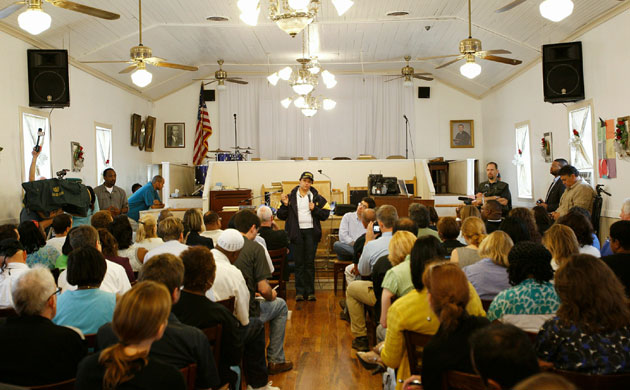
Administrator Jackson toured a stretch of the Mississippi coastline that could be impacted by the spill and held a community meeting in at the Leo Seals Community Center in Waveland, Mississippi to discuss the spill and the government’s response.

Lisa Jackson
The Administrator held a meeting at Greater Little Zion Baptist Church with community leaders in New Orleans, toured Plaquemines Parish in New Orleans and met with representatives of the fishing, oyster and shrimping industries.

Administrator Jackson also briefed President Obama when he arrived in the area to see the spill and mitigation preparations.

President Barack Obama is briefed by National Incident Commander U.S. Coast Guard Commandant Admiral Thad Allen and EPA Administrator Lisa Jackson in Venice, Lousianaa. , as he visits the Gulf Coast region affected by the British Petroleum oil well spill, Sunday, May 2, 2010.

EPA Establishes Web site on BP Oil Spill

As part of the ongoing federal response to the BP spill in the Gulf of Mexico, EPA has established a website to inform the public about the spill’s impact on the environment and the health of nearby residents. The website – - will contain data from EPA’s ongoing air monitoring along with other information about the agency’s activities in the region.

Additional information on the broader response from the U.S. Coast Guard and other responding agencies

EPA has established air monitoring stations along Plaquemines Parish on the Louisiana coast. EPA established those facilities to determine how oil set on fire in the gulf and oil that is reaching land is impacting air quality. EPA is monitoring levels of a number of chemicals potentially emitted by oil, including volatile organic compounds such as xylene, benzene and toluene.

EPA has also deployed two Trace Atmospheric Gas Analyzers – mobile laboratories that collect and analyze air quality samples in real time – to monitor air quality in the region. EPA tested smoke from the controlled burn and found the Louisiana coast had not been affected.

In addition to monitoring air quality, EPA is also assessing the coastal waters affected by the spreading oil. EPA deployed twin-engine aircraft to assist in the collection of air sampling data and photograph the spill and surrounding area.

Wednesday, April 28, 2010

Unbelievable: Burning Spilled Oil in Gulf of Mexico


NASA

The Center's aggressive opposition to expanded offshore oil drilling is being justified by the latest twist in the Gulf accident scenario: the U.S. Coast Guard is going to burn the spilled oil. Now the ocean pollution problem will be an air pollution problem too. In the grand scheme of bad choices, it is probably better to burn it than to allow it to hit the beaches and marshes along the Gulf Coats. But let us not forget, in addition to the air and water threats, 11 lives were lost in the accident.

The oil slick is 100 miles by 45 miles now, about the size of Jamaica, and is about 15 miles off the Louisiana coast.

The Transocean Ltd. rig Deepwater Horizon caught fire on April 20 and sank on April 22. BP PLC, the oil company, contracted with Transocean to use the rig, had failed to shut down the gushing crude.

EPA Administrator Before House Energy and Environment

Statement of Lisa P. Jackson Administrator, U.S. Environmental Protection Agency

Legislative Hearing on Clean Energy Policies That Reduce Our Dependence on Oil

House Subcommittee on Energy and the Environment

FULL STATEMENT

Excerpts

First, in April 2007, the U.S. Supreme Court concluded in Massachusetts v. EPA that the Clean Air Act’s definition of air pollution includes greenhouse gases. The Court rejected then-Administrator Johnson’s refusal to determine whether that pollution from motor vehicles endangers public health or welfare. In response to the Supreme Court’s decision, and based on the best available science and EPA’s review of thousands of public comments, I found in December 2009 that motor-vehicle greenhouse gas emissions do endanger Americans’ health and welfare.

The second pivotal event was the agreement President Obama announced in May 2009 between EPA, the Department of Transportation, the nation’s automakers, America’s autoworkers, and the State of California to seek harmonized, nationwide limits on the fuel consumption and greenhouse gas emissions of new cars and light trucks. My endangerment finding in December satisfied the prerequisite in the Clean Air Act for establishing a greenhouse gas emissions standard for cars and light trucks of Model Years 2012 through 2016.

But if Congress now nullified EPA’s finding that greenhouse gas pollution endangers the American public, that action would remove the legal basis for a federal greenhouse gas emissions standard for motor vehicles. Eliminating the EPA standard would forfeit one quarter of the combined EPA-DOT program’s fuel savings and one third of its greenhouse gas emissions cuts. California and the other states that have adopted California’s greenhouse gas emissions standard would almost certainly respond by enforcing that standard within their jurisdictions, leaving the automobile industry without the nationwide uniformity that it has described as vital to its business.

Center Launches South Africa Energy Partnerships Program

The Center is embarking upon a strategy to create partnerships between American, European and South African energy companies and governments. This strategy is comprehensive and covers the full range of natural resources from coal, oil, nuclear, natural gas, mining, electricity, hydro, conservation, efficiency, water resources, and carbon dioxide offsets. The Center is seeking to partner with companies interested in working with companies that not only want to generate profits via appropriate technologies and environmentally friendly projects, but who also seek to expand ownership opportunities for environmental entrepreneurs.

The Center is currently meeting with American companies to brief them about investment and project opportunities in South Africa and throughout the African Union. The Center is seeking direct and indirect partnerships to pursue energy development projects. We are seeking ownership stakes in energy and water ventures. The Center also intends to examine the feasibility of leveraging greenhouse gas (GHG) offsets in financing projects and compensating African Union countries for reducing their carbon footprints.

EPA Map Tracks Enforcement in Chesapeake Bay

EPA Launches Online Map Tracking Enforcement Actions in Chesapeake Bay Watershed

The U.S. Environmental Protection Agency has launched an online map that shows the locations of federal air and water enforcement actions in the Chesapeake Bay watershed. The map is part of EPA’s increased focus on enforcement of federal pollution laws in the Chesapeake Bay region, including a new strategy of targeting geographic areas and pollution sources contributing the greatest amounts of nitrogen, phosphorus and sediment to streams, creeks, rivers and the bay.

EPA developed the Chesapeake Bay Compliance and Enforcement Strategy to target the greatest sources of pollution impairing the bay and its tributaries. The draft strategy is a multi-state plan for addressing violations of federal environmental laws, and will be finalized in May as part of the Chesapeake Bay Executive Order.

Last year, EPA tabulated enforcement statistics specifically for the Chesapeake Bay watershed and airshed for the first time. Since 2009, EPA has entered into 10 civil judicial settlements and issued 36 administrative orders to sources contributing to the bay’s impairment. These enforcement actions cover 248 facilities in nine states and the District of Columbia. These actions will reduce approximately 16 million pounds of nitrogen oxides to the bay airshed and 2,100 pounds of nitrogen and phosphorus and 82 million pounds of sediment to the bay watershed annually once all required controls are fully implemented. Additionally, settling companies have agreed to invest more than an estimated $731 million in actions and equipment to reduce pollution to the bay and pay $7.2 million in civil penalties.

More information on the map

Information on Chesapeake Bay Compliance and Enforcement Strategy

Cape Wind Project Approved by Department of Interior

The Department of the Interior has approved the 130-turbine Cape Wind Associates project in Nantucket Sound off the coast of Massachusetts. The 440 foot tall turbines (with blades) will cover 24 square miles, roughly the size of Manhattan. Litigation could still stall the project for years. The $1 billion project has already been in the planning and approval stages for nine years.

The Center (through its outreach arm) was an early supporter of this project and presented testimony before the U.S. Coast Guard at a Massachusetts Institute of Technology (MIT) hearing on the project in 2004

Tuesday, April 27, 2010

Climate Change Indicators in the United States

Collecting and interpreting environmental indicators play a critical role in our understanding of climate change and its causes. An indicator represents the state of certain environmental conditions over a given area and a specified period of time. Examples of climate change indicators include temperature, precipitation, sea level, and greenhouse gas concentrations in the atmosphere.

EPA's Climate Change Indicators in the United States (PDF) report will help readers interpret a set of important indicators to better understand climate change. The report presents 24 indicators, each describing trends related to the causes and effects of climate change. It focuses primarily on the United States, but in some cases global trends are presented to provide context or a basis for comparison. EPA will use these indicators to collect data and generate analyses to:

Monitor the effects/impacts of climate change in the United States
Assist decision–makers on how to best use policymaking and program resources to respond to climate change
Assist EPA and its constituents in evaluating the success of their climate change efforts
EPA Site

Two New EPA Regional Administrators Announced

Dr. Susan Hedman as Regional Administrator for Region 5

James B. Martin as Regional Administrator for Region 8


Susan Hedman will oversee Region 5, comprising Illinois, Indiana, Michigan, Minnesota, Ohio, Wisconsin and 35 tribal nations. Susan has worked in environmental protection for nearly 30 years, from teaching environmental policy at Northland College in Ashland, Wisconsin, to practicing as a staff attorney for the Environmental Law and Policy Center. Susan comes to us from Illinois Attorney General Lisa Madigan’s office, where she served as environmental counsel and senior assistant attorney general. Prior to that, she was the senior policy advisor on energy and recycling at the Illinois Department of Commerce and Economic Opportunity. She was also the First Legal Officer for the United Nations Security Council team, in charge of presenting claims for environmental damage from the oil fires in Kuwait. She holds a bachelor’s degree from Ripon College in Wisconsin, a master’s from the La Follette Institute of Public Affairs at the University of Wisconsin-Madison, a law degree from the University of Wisconsin Law School, and a Ph.D. from the Gaylord Nelson Institute for Environmental Studies in Madison, Wisconsin.

James B. Martin, right, will oversee Region 8, comprising Colorado, Montana, North Dakota, South Dakota, Utah, Wyoming and 27 tribal nations. He has worked in the environmental field for nearly 30 years, most recently as the executive director of the Colorado Department of Natural Resources and the executive director of the Colorado Department of Public Health and Environment. Prior to his career in public service, James managed a nonprofit focused on energy, public lands, and water issues, and spent a decade as the senior attorney for the Environmental Defense Fund. He also headed the Natural Resources Law Center at the University of Colorado School of Law where he managed an interdisciplinary public policy think tank and taught advanced seminars on energy law, policy and land-use planning. He started his legal career working for four Columbia River treaty tribes in efforts to secure their treaty fishing rights. James has a bachelor’s degree from Knox College and a law degree from Northwestern Law School, Lewis and Clark College.

Monday, April 26, 2010

Coal Mine and Offshore Oil Rig Accidents

PRESIDENT'S CORNER

By Norris McDonald

April was a deadly month for the coal and oil industries.

The April 5 accident at Massey Energy Co.’s Upper Big Branch mine killed 29 miners. The usual reviews and reforms followed just as they will after the next coal mine methane explosion. People are going to die is they mine coal deep underground.

My condolences to those who lost loved ones in the latest Massey mine accident.

On April 20, an oil rig caught fire, exploded and then sank off the coast of Lousiana killing 11 workers. My condolences to the families who lost their loved ones in this accident.

In addition to the lost lives, the accident is an ongoing environmental disaster with un undermined amount of oil being spilled into the Gulf of Mexico. It is spewing oil into the ocean day and night and nobody seems to know when it can be plugged. Officials can only speculate as to whether the oil will wash up on shore.

The Center does not oppose coal use. We do advocate that it should be used as cleanly as possible. We oppose expanded offshore oil drilling because it will increase the likelihood of additional accidents such as this one. Our coasts and our oceans are simply too valuable to risk permanent harm from offshore oil accidents. Forty lives lost in one month. Coal mining and oil production are dangerous businesses. I salute the people willing to risk their lives on a daily basis to assure that we get the energy we need to run our country.