Tuesday, August 28, 2012

Center Partners With Water Management, Inc

Section 3 Water Conservation Jobs Training and Business Creation Program


Center for Environment, Commerce & Energy
Water Management, Inc.
HUD Outreach
Section 3
July 2012
WANTED:
SECTION 3

 WATER MANAGEMENT ENTREPRENEURS

The Center for Environment, Commerce and Energy (Center) and Water Management, Inc (WMI) have partnered to offer water management entrepreneurial services to Public Housing Authorities and their residents.
 
Section 3 businesses should contact Water Management, Inc. (WMI) today if they are interested in providing water management services . WMI is prepared to work with already certified Section 3 businesses and is also prepared to assist prospective businesses in establishing water services companies.If your housing authority is interested in saving water, please share this notice with residents of public housing or other low income people who you believe would be a good match for this sort of work.

ENERGY SERVICE COMPANIES
Creating Jobs & Saving Money

Energy Services Contracts include water management as a component of saving energy and money. Water Management, Inc. is examing the feasibility of integrating Energy Performance Contracts with Section 3 entrepreneurial actitivities.

We can save water, create new businesses, increase cash flows and save on utility bills all at the same time.
Let us show you how this can be done.

Water Management, Inc
About

Water Management, Inc. is well established in the field of water efficiency and conservation and has developed a successful track record since its founding in 1980. WMI operates nationwide with offices in Alexandria, VA (Headquarters), Nashville, Atlanta, Boston, Fort Worth and Los Angeles.

Experience
Testing Lab

Urinals
Over the past 30 years, WMI's water professionals have conserved hundreds of billions of gallons of water for our clients. WMI continually trains its personnel in leading water conservation techniques so our clients can be assured of world class service in the areas of water demand management and conservation. Roughly two-thirds of our employees are involved with hands-on supervision or direct product installation.

Water Management Inc. also operates an in-house testing laboratory to advise our clients on which products will best fit the water efficiency needs of their property.

Center for Environment,
Commerce & Energy
About


The Center for Environment, Commerce & Energy is an environmental organization dedicated to protecting the environment, promoting the efficient use of natural resources, enhancing human, animal and plant ecologies and increasing participation in the environmental movement.

HUD Section 3
Creating Entrepreneurs

HUD


The HUD Section 3 program requires that recipients of certain HUD financial assistance, to the greatest extent possible, provide job training, employment, and contract opportunities for low- or very-low income residents in connection with projects and activities in their neighborhoods.

WMI and the Center support the HUD Section 3 program and are available to provide outreach and support services to public housing entrepreneurs. WMI and the Center will provide water management support services.
Contact Me Today

Norris McDonald
WMI and the Center are available to provide training and incubator water management company services to Section 3 companies.

Contact: Norris McDonald
NorrisMcDonald@cfece.org
1629 K Street, NW., Suite 300
Washington, DC 20006
443-569-5102
Thank you for considering us.

We want to save water and create water efficiency entrepreneurs.

Sincerely,
Norris McDonald, President
Center for Environment, Commerce & Energy
Russ Horner, President
Water Management, Inc.

Thursday, August 23, 2012

Exelon and First Solar

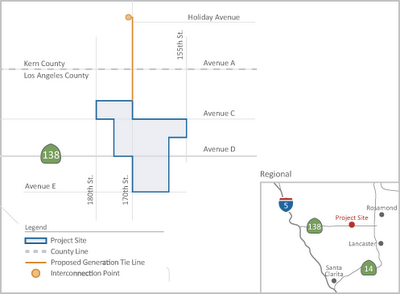
In September, 2011, Exelon Corporation acquired Antelope Valley Solar Ranch One, a 230-megawatt (MW) solar photovoltaic (PV) project under development in northern Los Angeles County, Calif., from First Solar, which developed and will build, operate, and maintain the project. Construction has started, with the first portion of the site expected to come online in late 2012 and full operation planned for late 2013.

When fully operational, AV Solar Ranch One will be one of the largest PV solar projects in the world, with approximately 3.8 million solar panels generating enough clean, renewable electricity to power the equivalent of 75,000 average homes per year. The project has a 25-year power purchase agreement (PPA), approved by the California Public Utilities Commission, with Pacific Gas & Electric for the full output of the plant.

Exelon expects the total investment of up to $1.36 billion to be accretive to earnings beginning in 2013 and free cash flow accretive starting in 2013. The project is value accretive, and will have stable earnings and cash flow profiles due to the PPA. Exelon expects to invest up to $713 million in equity in the project through 2013.

The Treasury Department approved a $646 million loan, guaranteed by the U.S. Department of Energy's Loan Programs Office to support project financing for AV Solar Ranch One. Advances under the loan are contingent on the satisfaction of various conditions. No regulatory approvals are needed for Exelon's acquisition of AV Solar Ranch One from First Solar.

The project will deliver economic benefits to the local community and the state of California, including the generation of state and local tax revenues and creation of up to a peak of 400 construction jobs and up to 15 ongoing operations and maintenance positions, with an emphasis on hiring workers from the local area.

When fully operational, AV Solar Ranch One will displace approximately 140,000 metric tons of carbon emissions per year - the equivalent of taking approximately 30,000 cars off the road. Plus, it will generate electricity with no water use, no air emissions and no waste production. Exelon's existing solar assets include Exelon City Solar, the nation's largest urban solar power plant, which is located on the South Side of Chicago and was completed in 2010.

The project will be built on 2,100 acres of fallow farmland near Lancaster, Calif., in the Antelope Valley area of the Western Mojave Desert, approximately 80 miles north of Los Angeles. The transaction expands Exelon's geographic presence into California, an attractive solar market with an ambitious renewable energy policy and some of the best PV resources in the world.

AV Solar Ranch One will employ First Solar's FS Series 3 PV Module and deploy its tracking system on a portion of the facility. The technology will increase electricity output by tilting the solar panels to track the daily path of the sun. The project also will feature innovative inverters with voltage regulation and monitoring technologies, which provide more stable and continuous power, increasing the project's efficiency and reliability. (First Solar)

Exelon Corporation is one of the nation's largest electric utilities with more than $18 billion in annual revenues. Exelon distributes electricity to approximately 5.4 million customers in northern Illinois and southeastern Pennsylvania and natural gas to approximately 490,000 customers in the Philadelphia area. Exelon is headquartered in Chicago and trades on the NYSE under the ticker EXC. First Solar (Nasdaq: FSLR) manufactures solar modules with an advanced semiconductor technology, and is a premier provider of comprehensive photovoltaic (PV) system solutions. The company is delivering an economically viable alternative to fossil-fuel generation today. From raw material sourcing

Center Seeking Keystone Pipeline Construction Contract

The Center and its pipeline construction partner, S.L. Sibert Management and Construction Company (SLSMC), are pursuing contracting opportunities on the proposed Keystone XL pipeline project.  The Center hopes the pipeline, TransCanada, will select our team to construct a portion of the pipeline.  The Center would assure that appropriate environmental protections are in place and SLSMC has extensive experience in pipeline construction.

The Keystone pipeline already runs from Edmonton, Alberta, Canada to Cushing, Oklahoma.  The southern extension from Cushing, Oklahoma to Port Arthur and Houston, Texas has been approved.  The controversial project is still awaiting State Department approval, which should come early in 2013, if not sooner.  The project needs State Department approval because it crosses an international border.  The Keystone XL Expansion pipeline would provide a shortcut and extension from Cushing, Oklahoma to Port Arthur and Houston.  The Center/SLSMC is prepared to participate in construction along any section of the pipeline.

Keystone XL Pipeline Primer

Mitt Romney Energy Plan

Mitt Romney released his new energy plant in a white paper and it focuses on developing domestic fossil fuels like oil, gas and coal. Romney's plan would make states the custodian of energy production on federal lands within their borders and allow them to implement their own federally-approved leasing practices. Such a move would effectively shift responsibility for permitting, leasing and environmental regulation from the Department of the Interior to states, with the hope of speeding energy development by cutting red tape.

Romney's plan calls for reaching North American energy independence by 2020, primarily through expansion of traditional fossil fuels. The United States is currently the world's third largest oil producer, which Romney would hope to expand. The U.S. also currently imports more than half its oil from countries in the Western Hemisphere, with Canada making up a 29-percent share. According to Romney, those imports could be increased through greater cooperation and by the immediate approval of the Keystone XL pipeline, and similar projects.


The Romney includes greenlighting increased offshore drilling, slowed after 2009's BP oil spill disaster, particularly off the coasts of Virginia and North Carolina.

The GOP challenger's plan pays little attention to renewable fuels like wind and solar power.  Romney's plan includes continued research support for alternative fuels, but would have wind and solar generation succeed or fail on their own, without government subsidies or loan guarantees.
President Obama makes a contrasting argument about continued oil industry tax subsidies, arguing that the highly profitable major oil companies don't need the tax breaks, the extension of which is supported by Romney. (NBC News)

Wednesday, August 22, 2012

Shipbreaking in Brownsville, Texas

Special Projects

Chairman, Doc Sloan

ESCO Shipbreaking Site
Although most shipbreaking is done overseas, there are a few shipbreaking companies in the United States.  Ship breaking in the United States is booming at the moment, as congressional mandates to reduce the rotting hulks in the three Ghost Fleets of the nation are being implemented. These mothball fleets are composed primarily of US Maritime Administration (MARAD) reserve ships, initially kept in case they needed to be activated again for war. These reserve fleets started after WWII, the biggest ship-building boom in history. In 1950, there were over 2,000 surplus federal ships, tied together in slack water clusters around the nation.

ESCO is a ship breaking site in the USA located in Brownsville, Texas, just a few miles from Mexico. This is where the vast majority of the nation’s federal ships are broken apart. A 15 mile-long channel, made from scratch from 1934-1936, connects the Port of Brownsville to the ocean, at South Padre Island. Built inland to protect the port from hurricanes, not much occurs along the channel’s first ten miles.

ESCO is an active 88 acre yard full of scrap piles, metal processing machinery, cranes, and processing areas where larger chunks of the ship have been removed and are being cut down on shore with torches and other equipment. ESCO has salvaged former offshore rigs as well.

 
Center-Arranged Youth Tour of Avesta Sheffield Plant

Special Projects Chairman Doc Sloan put together a program on behalf of the Center in 1998 that sought to combine shipbreaking on the Patapsco River in Baltimore with a Welfare-To-Work component that included a steel plant in Baltimore County.  Unfortunately, the steel plant closed unexpectedly just as the program was about to launch.

The Center assisted Avesta Sheffiend Steel Company in addressing pollution issues at the site and took Baltimore inner city youth on a tour of the facility.

President Roy Cooke, Avesta Sheffield-East President is in green in the above photo, Joe Duncan, President of the United Steel Workers of America, Local 1245 is in the middle and Center President Norris McDonald is at right at the steel plant near Baltimore.(1998)

Doc Sloan is working with ESCO to explore unique entrepreneurial opportunities.  The Center stands ready to assist ESCO with environmental services and assessments at the site. (The Center For Land Use Interpretation) 

Tuesday, August 21, 2012

Natural Gas Key To Renewable Energy Use

Combined-Cycle Gas Turbine Plants Solve Intermittency Problem of Wind & Solar 

How do we develop an energy future that copes with the variability of solar and wind energy? Non-renewable natural gas seems destined to play a larger role in ushering in a greater penetration of renewable energy. It's the only practical utility-scale source of energy that can be to help match fluctuations in load.

While gas supply and pricing have historically been subject to significant fluctuations, it appears that for the foreseeable future, gas will continue to be consistently affordable and plentiful in North America. Much of this comes from the growth of technology for pulling gas from "tight" rock formations such as shale.

These supplies are widely distributed geographically, so that many parts of the country can access gas supplies without the risk of power loss due to long-distance electrical transmission, or gas pipelines.

The pricing point for natural gas futures contracts traded on the New York Mercantile Exchange is forecasted to be below $6/mmbtu through 2016, at which price electricity can be produced for about $55/MWh. As of this writing, gas trades below $2/mmbtu, allowing electricity to be produced for around $30/MWh.

To support the intermittent nature of wind and solar power,
gas turbine manufacturers such as Alstom are building
 quick-firing  gas turbines. Alstom's GT24 gas turbine.
 Photo courtesy Alstom
The combined-cycle gas turbine plants (CCGT) uses a gas turbine generator to generate electricity and the heat of its exhaust to make steam, which in turn drives an electricity-generating steam turbine.  Gas turbine manufacturers have invested heavily in fast-start combined cycle plant designs, which have the potential to integrate well with renewable resources. CCGT cycle plants offer significant advantages compared to nuclear and coal, including shorter start-up time, high start reliability, lower start-up costs, daily multi-startup and shutdown, high ramping rates, and extended emission compliance at partial loads, as well as comparatively lower installed cost.

CCGT is the best match with a wind turbine farm because, during a hot summer day a wind farm will generate less power in the afternoon, when power is needed the most and when power prices are highest. A thermal solar energy facility can be used during the day to supplement the steam supply from the turbine's Heat Recovery Steam Generator (HRSG) -- a solution most applicable to hot, sunny areas such as the Southwest.

With CCGT technology, the way is clearer for gas-fired generation to provide the power needed to compensate for the fluctuations in solar and wind power supply, allowing these green energy sources to provide more of the total energy share.

Compared to some power technologies, CCGT plants make few infrastructure demands. They must have a source of water for the boiler and a fuel supply. If operated in tandem with renewable energy, they need a turbine-generator technology and a plant design that can match the fluctuations of the renewable resource.

If located close to the renewable energy source, the CCGT plant can share interconnection facilities and help regulate the output of that wind or solar power installation. If located along the transmission corridor, it can help regulate the supply from several renewable-energy generation sites and electricity users.

The capacity factor for wind power is in the range of 13 percent to 40 percent depending on the location, and is normally higher at night. Many merchant CCGT plants are operating in the range of 40 percent to 60 percent capacity factor, and normally run during the day when demand and prices are higher. Accordingly, wind farm and CCGT plant generation capacity factors can balance each other to create a higher overall capacity factor and revenue stream.

Building CCGT to complement wind and other renewable energy sources is not economically viable without price support and regulatory incentives. Incentives from governments are required to support the higher operating costs of the CCGT, due to lower output. Renewable energy must be sustained with tax incentives, including PTCs, federal Modified Accelerated Cost Recovery Systems (MACRS), state Accelerated Depreciation and other tax exemptions. Incentives could be provided to natural gas suppliers and generators to raise allowable renewable energy penetrations to the grid.

Current trends indicate that if wind and solar grow, the output of these variable resources will need to be stabilized through variable output, baseload power such as gas-fired generation. Renewable energy alone will not be a viable source of energy, but integration of variable output, baseload generation, such as natural gas combined cycle plants will allow renewable energy to grow. (By Ying Ng, Power Engineering, 7/1/2012)

Natural Gas v. Coal

According to data from the Energy Information Administration (EIA), natural gas accounted for 28.7 percent of total generation during the first quarter of 2012, compared with 20.7 percent during the same quarter last year. In contrast, coal's portion of total generation declined from 44.6 percent to 36.0 percent over the same period. Even more drastic numbers can be seen when comparing the amount of gas generation in March 2012 to March of last year. According to the EIA, U.S. power plants increased natural gas use by 40 percent this March compared to a year earlier – from 503.9 billion cubic feet (Bcf) in March 2011 to 703.5 Bcf in March of this year.

As natural gas prices have reached startling lows this year, gas has taken a sizeable amount of U.S. electric power generation from coal. Many utilities being forced to retrofit or retire coal-fired facilities to comply with the Mercury and Air Toxics Standard and Cross State Air Pollution Rule (struck down by court) are finding solutions in revamping their plants as partial gas-burning facilities. Additionally, natural gas facilities constructed in the early 2000s that have been operated as peakers in the past are now being called upon to run at significantly higher rates.

With regulations targeting not only the traditional emissions such as sulfur dioxide and nitrogen oxide, but also new challenges like mercury and carbon capture, coal is not a cheap option for the time being. A number of new facilities that were formerly proposed as coal plants have switched to full natural gas or combined cycle over the last few years. One of the few remaining proposed coal plants, the Taylorville Energy Center, is likely to switch to gas.

The continued development of natural gas shale resources and an exceptionally warm winter have contributed to an overabundance of natural gas. The average spot price for natural gas in April 2012 was less than $2 per mmBtu, and prices may remain relatively low for a while.  Gas prices in the U.S. could double in the next three years due to the gas demand as coal is replaced for gas in electricity.  For the short-term, gas will likely stay far below $5.  (Power Engineering, 7/12/2012)

Court Strikes Down EPA Cross State Air Pollution Rule

The United States Court of Appeals for the District of Columbia, in a 2-1 ruling today, said the Environmental Protection Agency had exceeded its authority in the way it apportioned the cleanup work among 28 upwind states, called the Cross-State Air Pollution Rule.  The rule addressed how to deal with states whose own air was clean enough, but were hosts to power plants, refineries and other industrial plants that emitted sulfur dioxide and nitrogen oxide pollutants that prevented neighboring states from attaining the level of cleanliness required under the Clean Air Act.

The rule was EPA’s attempt to carry out a court-ordered fix on an earlier version, the 2005 Clean Air Interstate Rule.  The court said that the E.P.A. was authorized to set rules that would require upwind states “to bear responsibility for their fair share of the mess in downwind states.”  But the E.P.A. had improperly required states “to reduce their emissions by more than their own significant contribution to a downwind state’s nonattainment,” according to the opinion, written by Judge Brett M. Kavanaugh and joined by Judge Thomas B. Griffith. Judge Judith W. Rogers dissented from the ruling.       

The E.P.A.’s rule also violated the Clean Air Act because it failed to let the states submit their own plans to comply and imposed a federal plan instead, the court said. The statute leaves it to the states to decide how they will meet federal standards. The ruling could also leave the previous Clean Air Interstate Rule in place.    

Several power companies had challenged the E.P.A. rule, and were supported by more than a dozen states, mostly in the South and Midwest. North Carolina supported the rule, along with several mid-Atlantic and New England states.
      
Many big environmental groups, including the Sierra Club, Environmental Defense Fund, Clean Air Task Force, American Lung Association, and the Natural Resources Defense Council, supported the E.P.A.’s position and were joined by downwind states and cities. (NYT, 8/21/2012)

Natural Gas & Renewables Dominate 2012 Capacity Additions


During the first half of 2012, 165 new electric power generators were added in 33 states, for a total of 8,098 megawatts (MW) of new capacity. Of the ten states with the highest levels of capacity additions, most of the new capacity uses natural gas or renewable energy sources. Capacity additions in these ten states total 6,500 MW, or 80% of the new capacity added nationally in the first six months of 2012.

Most of the new generators built over the past 15 years are powered by natural gas or wind. In 2012, the addition of natural gas and renewable generators comes at a time when natural gas and renewable generation are contributing increasing amounts to total generation across much of the United States. In particular, efficient combined-cycle natural gas generators are competitive with coal generators over a large swath of the country. And, in the first half of 2012, these combined-cycle generators were added in states that traditionally burn mostly coal.

Only one coal-fired generator was brought online in the first half of 2012, an 800-MW unit at the Prairie State Energy Campus in Illinois. In its 2011 annual survey of power plant operators, the U.S. Energy Information Administration (EIA) received no new reports of planned coal-fired generators. Of the planned coal generators in EIA databases, 14 are reported in the construction phrase, with an additional 5 reporting a planned status but not yet under construction. However, only one of the 14 advanced from a pre-construction to an under-construction status between the 2010 and 2011 surveys.


More small generators were added than large generators: of the 165 generators added, 105 were under 25 MW. Many of these use renewable energy sources, most commonly solar and landfill gas; wind plants aggregate many individual turbines into one large "generator" for reporting purposes.

Solar has shown significant growth in the electric power sector over the past two years. From the beginning of 2010 to the end of June 2012, 1,308 MW of new utility-scale solar capacity has come online, more than tripling the 619 MW in place at the end of 2009. Despite this significant increase, these additions understate actual solar capacity gains. Unlike other energy sources, significant levels of solar capacity exist in smaller, non-utility-scale applications (e.g., rooftop solar photovoltaics). 

More capacity was added in the first half of 2012 than was retired. A total of 3,092 MW was retired, from 58 generators in 17 states. Over half of this was coal, and another 30% was petroleum-fired generators. (EIA)

Resources For The Future: New Shale Gas Research

"A Review of Shale Gas Regulations by State"

Experts at Resources For The Future (RFF) analyzed regulations in the 31 states that have significant shale gas reserves to identify how 20 important regulatory elements are applied in each state.

The maps in this project show the preliminary results of these efforts for approximately 20 important regulatory elements in each state in the continental United States.  The purpose of these maps is to provide an overview of the regulatory patterns, similarities, and differences among states.  (RFF)

Saturday, August 18, 2012

GAO Report on EPA Regulations and Electricity

The General Accounting Office (GAO) recently completed a report (summary) on the effects of Environmental Protection Agency regulations on the electric utility industry ("EPA Regulations and Electricity: Better Monitoring by Agencies Could Strengthen Efforts to Address Potential Challenges"). 

EPA recently proposed or finalized four regulations affecting coal-fueled electricity generating units, which provide almost half of the electricity in the United States:

(1) the Cross-State Air Pollution Rule;

(2) the Mercury and Air Toxics Standards;

(3) the proposed Cooling Water Intake Structures regulation; and

(4) the proposed Disposal of Coal Combustion Residuals regulation.

Power companies may retrofit or retire some units in response to the regulations. EPA estimated two of the regulations would prevent thousands of premature deaths and generate $160-$405 billion in annual benefits. Some stakeholders have expressed concerns that these regulations could increase electricity prices and compromise reliability—the ability to meet consumers' demand. FERC and others have oversight over electricity prices and reliability. DOE can order a generating unit to run in certain emergencies. GAO was asked to examine: (1) actions power companies may take in response to these regulations; (2) their potential electricity market and reliability implications; and (3) the extent to which these implications can be mitigated.

It is uncertain how power companies may respond to four key Environmental Protection Agency (EPA) regulations, but available information suggests companies may retrofit most coal-fueled generating units with controls to reduce pollution, and that 2 to 12 percent of coal-fueled capacity may be retired.  Power companies may also build new generating units, upgrade transmission systems to maintain reliability, and increasingly use natural gas to produce electricity as coal units retire and remaining coal units become somewhat more expensive to operate.

Available information suggests these actions would likely increase electricity prices in some regions. Furthermore, while these actions may not cause widespread reliability concerns, they may contribute to reliability challenges in some regions.

Regarding prices, the studies GAO reviewed estimated that increases could vary across the country, with one study projecting a range of increases from 0.1 percent in the Northwest to an increase of 13.5 percent in parts of the South more dependent on electricity generated from coal. According to EPA officials, the agency’s estimates of price increases would be within the historical range of price fluctuations, and projected future prices may be below historic prices.

Regarding reliability, these actions are not expected to pose widespread concerns but may contribute to challenges in some regions.  Among other things, it may be difficult to schedule and complete all retrofits to install controls and to resolve all potential reliability concerns associated with retirements within compliance deadlines.

Existing tools could help mitigate many, though not all, of the potential adverse implications associated with the four EPA regulations, but the Federal Energy Regulatory Commission (FERC), Department of Energy (DOE), and EPA do not have a joint, formal process to monitor industry’s progress in responding to the regulations. Some tools, such as state regulatory reviews to evaluate the prudence of power company investments, may address some potential price increases. Furthermore, tools available to industry and regulators, as well as certain regulatory provisions, may address many potential reliability challenges.  FERC, DOE, and EPA have not established a formal, documented process for jointly and routinely monitoring industry’s progress and, absent such a process, the complexity and extent of potential reliability challenges may not be clear to these agencies. This may make it more difficult to assess whether existing tools are adequate or whether additional tools are needed. (GAO)

Thursday, August 16, 2012

Pipelines

The nation’s network of more than 2.5 million miles of pipeline is largely regulated by the Department of Transportation’s (DOT) Pipeline and Hazardous Materials Safety Administration (PHMSA) and state entities. Part of this network consists of more than 200,000 miles (estimated) of onshore "gathering" pipelines, which transport hazardous liquid and natural gas products from wells to processing facilities and to larger transmission pipelines. Many of these gathering pipelines, however, have not been subject to PHMSA regulation because they are generally located away from population centers and operate at low pressures.

Pipelines transport roughly two-thirds of domestic energy supplies throughout the United States. These pipelines carry hazardous liquids and natural gas from producing wells to end users (residences and businesses). Within this nationwide system, there are three main types of pipelines.

Gathering pipelines


Gas gathering pipelines collect natural gas from production areas, while hazardous liquid gathering pipelines collect oil and other petroleum products. These pipelines then typically transport the products to processing facilities, which in turn refine and send the products to transmission pipelines. According to PHMSA officials, traditionally, gathering pipelines range in diameter from about 2 to 12 inches and operate at pressures that range from about 5 to 800 pounds per square inch (psi). These pipelines tend to be located in rural areas but can also be located in urban areas. PHMSA estimates there are 200,000 miles of gas gathering pipelines and 30,000 to 40,000 miles of hazardous liquid gathering pipelines.

Transmission pipelines

Transmission pipelines carry hazardous liquid or natural gas, sometimes over hundreds of miles, to communities and large-volume users (e.g., factories). For natural gas transmission pipelines, compression stations located periodically along the pipeline maintain product pressure. Similarly, pumping stations along hazardous liquid transmission pipelines maintain product flow. Transmission pipelines tend to have the largest diameters and pressures of any type of pipeline, generally ranging from 12 inches to 42 inches in diameter and operating at pressures ranging from 400 to 1440 psi.

Distribution pipelines

Gas distribution pipelines continue to transport natural gas to residential, commercial, and industrial customers, splitting off from transmission pipelines. These pipelines tend to be smaller, sometimes less than 1 inch in diameter, and operate at lower pressures—0.25 to 100 psi. PHMSA has estimated there are roughly 2 million miles of distribution pipelines, most of which are intrastate pipelines. There are no hazardous liquid distribution pipelines. For the purposes of this report, we use the term transmission pipeline to refer to both hazardous liquid and natural gas pipelines carrying product over long distances to users.

GAO: "PIPELINE SAFETY, Collecting Data and Sharing Information on Federally Unregulated Gathering Pipelines Could Help Enhance Safety," March 2012

Center Partners with S.L. Sibert Management & Construction Co.

The Center is partnering with the S.L. Sibert Management and Construction Company (SLSMC) to pursue pipeline construction contracts and pipeline ownership opportunities.

Sam Sibert
Norris McDonald
This is a particularly important time for this partnership because natural gas will be the dominant fuel source for new electricity power plants.  Liquefied natural gas exports will also be expanding significantly due to the increased utilization of hydraulic fracturing (fracking).  The Center and SLSMC intend to aggressively participate in this natural gas renaissance.

SLSMC founder and president Sam Sibert notes that, "thousands of miles of pipelines will be developed in the coming decade."    Center founder and president Norris McDonald says, "these pipelines will be on public and private lands.  We are seeking partners who can help facilitate our participation in this exciting new energy developement."  Please contact us if you are interested in such a partnership.

The SLSMC, formed in 1993, is a top pipeline construction company in the gas and electric industry. SLSMC is currently a primary contractor for the Texas Utilities and Electric Company (TXU). In 1996 S. L. Sibert became a prime contractor for TXU installing electrical services to the Dallas-Fort Worth Metroplex. Sibert widen the field in 1999 by including gas services to its rapidly expanding range of capabilities when they signed an Alliance Contract with TXU-Gas. Under the Alliance Contract Sibert installs new gas services in the Western Regions of Dallas and Fort Worth. In 2001 Sibert was able to showcase its advanced techniques in Directional Boring by completing a highly profiled water-line replacement job for Colleyville, Texas using a specific Boring method. The Colleyville water-line replacement was the first job of its kind completed in the Dallas-Fort Worth area.

Sam L. Sibert is a graduate of the University of Texas at Arlington. Sibert played for Kentucky State University where he helped lead his team to two NAIA national championships. Sibert also played in the National Basketball Association for Kansas City-Omaha King. He is founder and CEO of S.L. Sibert Company and he built one of the largest construction companies in north central Texas with employees operating in several states including Oklahoma.

DC Stormwater Proposed Rule (Tradable Stormwater Retention Credits)

Publication of the Proposed Rulemaking on Stormwater Management and Soil Erosion and Sediment Control in the D.C. Municipal Register (Friday, August 10th, 2012).  View and download the proposed rulemaking.

DDOE's proposed Stormwater Management Guidebook, which provides technical guidance on complying with the requirements in the Proposed Rulemaking.

DDOE will accept comments on the Proposed Rulemaking and Stormwater Management Guidebook for 90 days from the date of publication (through November 8, 2012). Instructions for submitting comments are provided in the preamble to the Proposed Rulemaking.

DDOE will be hosting numerous training sessions and two public hearings on the Proposed Rule and Stormwater Management Guidebook during the 90-day comment period. DDOE plans to hold at least two training sessions on each of the following topics:

· Achieving stormwater retention performance standards using technical guidance in the Proposed Stormwater Management Guidebook
· Use of off-site retention by regulated projects to achieve a portion of their stormwater retention volume
· Generation and certification of tradable Stormwater Retention Credits by sites that exceed their regulatory requirements and by sites that voluntarily retrofit with retention practices

DDOE will post dates for these sessions and the hearings. In addition, stakeholders and members of the public may request focused training sessions on other topics, as detailed in the preamble to the Proposed Rulemaking. DDOE will do its best to accommodate these requests and will provide notification of these additional sessions.

For additional questions, please contact Brian Van Wye at 202-741-2121.

Wednesday, August 15, 2012

Environmental Liability Transfer & Sparrows Point Steel Mill


Sparrows Point
St. Louis-based Environmental Liability Transfer and Hilco Trading, an Illinois liquidator bout the  Sparrows Point steel mill at auction for $72.5 million.  The former is a redevelopment firm and the latter is a  liquidation company. 

The parties resolved complex issues involving the site's environmental problems. The buyers agreed to pay $500,000 more than their winning bid of $72 million, to be put into an escrow fund. The additional money will pay for efforts to investigate the waters around the steel mill to see if steelmaking toxins have migrated from the property.

CDC is a leading North American real estate development firm specializing in the development, acquisition and redevelopment of major commercial and industrial sites. Since 1985, CDC has acquired over twenty million square feet under roof. As a byproduct of its pursuits, CDC has also acquired, indemnified and alleviated over three-quarters of a billion dollars of environmental liabilities. Major clients such as Caterpillar, General Motors, Textron, Kraft General Foods, Uniroyal, Kaiser Aluminum, G. Heileman Breweries, Fruit Of The Loom, PMX, ABB, Sanvick Milford, Millennium Chemicals and many more have effectively transferred and disposed of environmental liabilities

Environmental Liability Transfer, Inc.acquires and  provides complete removal of environmental liability. With ELT, companies can transfer all known and unknown liabilities.
Sparrows Point was one of Baltimore County's largest private employers. Once it was the largest in the state and supplied steel for the Golden Gate Bridge, the Chesapeake Bay Bridge and hundreds of ships for World War II. (The Baltimore Sun, 8/15/2012, ELT)

(MORE)

Saturday, August 11, 2012

Paul Ryan's Family Energy Business Interests

Paul Ryan, left, and his wife, Janna Little Ryan, right, have financial stakes, worth between $350,000 and $800,000, in her family’s Oklahoma-based land and energy companies, according to Ryan’s 2011 financial disclosure forms, filed in May.

The companies are Ava O Limited, which has mining interests; Blondie & Brownie LLC, which has gravel interests; Little Land Company, an oil and gas corporation; and Red River Pine Limited, a timber company, the forms show. Also listed on the forms are mining rights in Oklahoma. (Bloomberg, 8/11/2012)

Friday, August 10, 2012

Tidal Wave Power Project in Eastport, Maine

The Ocean Renewable Power Company has built and will operate a turbine generator unit, called TidGen, that will use the tides to generate electricity in The Bay of Fundy near Eastport, Maine (pop. 1,322) close to the Canadian border.  The Bay of Fundy has very high tides and extreme currents and the turbine generator, which looks a bit like an eggbeater turned sideways, will catch the energy of the rushing water, spinning a generator that sends power to the grid.
      
This will be the first tidal-power turbine project in the United States. It is experimental and expensive and a major advantage is you don’t see a thing. Wind farms have been criticized as ruining landscapes and has been used to block the projects. 

The Department of Energy has put up $10 million of the roughly $21 million in costs, hoping that tidal power can establish itself as part of the country’s arsenal of energy alternatives. The first turbine generator unit has a maximum output of 180 kilowatts, which would power about 30 homes. That is one-sixth the output of a typical wind turbine, although TidGen will turn more than a wind turbine, since the currents will push more consistently than wind.  The company plans to add two more turbine generators. If they survive, they are considering another stretch of water, where the current moves even faster, for an array that could hold up to 18 additional generator units.  When the whole project is done, projected for 2016, the array could power up to 1,500 homes.

TidGen Blades & Turbine

The rate set by the Maine Public Utilities Commission for power generated by the project is 21.5 cents per kilowatt-hour for the first year — about 8 cents higher than the average rate here. 
      
A handful of other companies are developing their own tidal power projects, like Verdant Power, which has tested turbines in the Hudson River. (NYT, 8/9/2012)

Thursday, August 09, 2012

Exelon To Sell 3 Coal Power Plants for $400 Million

Brandon Shores Plant with Scrubber Depiction
Exelon Corporation has agreed to sell its three Maryland coal-fired power plants for $400 million to Raven Power Holdings LLC, which is owned by New York-based private equity firm Riverstone Holdings LLC.  Exelon was required to sell the three plants — the Brandon Shores and H.A. Wagner plants in Anne Arundel County and the C.P. Crane plant in Baltimore Conty — by the end of the year as a condition of its $7.9 billion purchase of Constellation Energy Group in March.

The sale, subject to approval by the Federal Energy Regulatory Commission and the U.S. Department of Justice, is expected to be finalized in the last three months of the year. The Justice Department, FERC and the Maryland Public Service Commission required the sale as a condition of the merger.

Raven Power is a newly created portfolio company of Riverstone Holdings, and the co-founders of Riverstone, Pierre Lapeyre and David Leuschen, said the energy investors were attracted to the Maryland plants because of their experienced workforce and strong record of safe and environmentally sound operation.

The plants have undergone environmental upgrades since 2008. Constellation spent nearly $1 billion in 2010 on a pollution "scrubber" at Brandon Shores, the largest of the three Maryland plants. The facility, in Pasadena, is now considered one of the cleanest coal plants in the nation.

Riverstone, a private equity firm founded in 2000, invests in energy exploration and production, oil field services and power, and renewable energy. (The Baltimore Sun, 8/9/2012)

Wednesday, August 08, 2012

Sparrows Point Purchased For $72 million By Liquidator

Sparrows Point
Hilco Trading LLC, based in Illinois, a liquidation firm, won the bidding for Sparrows Point, offering $72 million for the Baltimore County steel mill — less than a tenth of what the complex sold for just four years earlier.  — and realizing the worst fears of its roughly 2,000 employees.

The local United Steelworkers union and its 2,000 members at the plant had hoped for a steelmaker would buy and restart the mill, idled after owner RG Steel filed for bankruptcy in May. But no steelmaking companies showed up to bid at the Tuesday afternoon auction in New York.  Bethlehem Steel filed for bankruptcy protection in 2001. Sparrows Point has had four owners since then.

Hilco Trading LLC, based in Illinois, dismantles closed industrial sites, sells off retail inventory and recently auctioned off equipment from bankrupt solar panel firm Solyndra.

Sparrows Point was one of Baltimore County's largest employers before the mass layoff, but it was far leaner in recent years than it was at its height under Bethlehem Steel. Together, the company's mill and shipbuilding complex in Sparrows Point employed about 30,000 people during World War II, producing hundreds of ships.

Sparrows Point
RG Steel owes the county nearly $4.6 million in property taxes and sewage charges — the mill was about to go to tax sale when the company filed for bankruptcy protection. The county's attorneys said in court documents Wednesday that the local government would object to any sale that didn't result in prompt repayment of those back taxes.

The mill sits on more than 2,400 acres at a prime location, south of Interstate 695 on a peninsula that juts into the Patapsco River. But the area is far from pristine. More than a century of steel making and finishing operations have resulted in perhaps the most complex environmental cleanup site in the Chesapeake Bay watershed. The U.S. Justice Department said in a court filing last week on behalf of the Environmental Protection Agency that the federal government would object to any buyer without the wherewithal to continue mandated efforts to find and remediate problems. (Baltimore Sun, 8/8/2012)


Monday, August 06, 2012

New Ethanol Coalition Fights To Save Federal Biofuels Support

Eight biofuels groups have formed a coalition to coordinate messaging to combat calls to limit a federal mandate for renewable fuels because of the drought. The drought has raised the profile of the renewable fuel standard, which requires 36 billion gallons of renewable fuels to be blended into traditional transportation fuel by 2022. That rule requires 15 billion gallons of corn-based ethanol to be blended into traditional transportation fuel by 2022. The remaining 21 billion gallons of that rule will be filled by advanced biofuels such as cellulosic ethanol, which is not yet produced at commercial scale.

Various lobbying groups, particularly industrial livestock producers and the petroleum refiners, argue this requirement should be waived because of the drought, which they say has caused the price of corn used for food and animal feed to skyrocket. The new organization, called the Biofuels Producers Coordinating Council, aims to defend the renewable fuel standard.

Several lawmakers representing livestock producers and dairy farmers have argued against the corn portion of the rule, which they say is contributing to high feed prices. But they have offered support for the cellulosic portion of the rule.

Representatives from the Advanced Biofuels Association, Advanced Ethanol Council, Algal Biomass Organization, American Coalition for Ethanol, Biotechnology Industry Organization, Growth Energy, National Biodiesel Board and Renewable Fuels Association will comprise the coalition.

Ethanol refiners already have responded to market signals by cutting back ethanol production because of high corn prices. Some believe that corn speculation has more to do with high prices than the RFS. With corn stocks shrinking, commodities traders are banking on corn futures in hopes of a strong rebound when the drought ends. (The Hill, 8/5/2012)

Friday, August 03, 2012

Murkowski or Wyden Will Chair Senate Energy

Sen. Lisa Murkowski (R-Alaska), left, will probably chair the Senate Energy and Natural Resources Committee if Republicans re-take the Senate in the fall elections, while Ron Wyden (D-Oregon), right, will probably chair the committee if Democrats retain control of the Senate.

Chairman Jeff Bingaman (D-New Mexico) is retiring.

Wednesday, August 01, 2012

Mining Industry Wins Mountaintop Removal Court Ruling

Mountaintop Removal
U.S. District Judge Reggie B. Walton Tuesday threw out tougher water-quality standards issued by the Environmental Protection Agency aimed at curbing environmental damage from surface coal mines in Appalachia. The ruling by was a victory for the mining industry, which has been fighting the Obama administration over a form of mining known as mountaintop removal. The practice involves blasting mountains to extract coal and pushing large quantities of rock and soil into streams.

Last year, the EPA for the first time set limits on the amount of minerals that can be deposited in stream as the result of surface mining in Appalachian states. High levels of some minerals can harm aquatic life. The National Mining Association opposed the stricter standards and argued in a federal lawsuit that the agency had overstepped its authority by avoiding the federal government formal rule-making process, which requires formal notice and opportunity for public comment.

Judge Walton sided with the industry, writing that the EPA had infringed on the authority granted to states under the Clean Water Act and the Surface Mining Control and Reclamation Act. He said his ruling didn't address how to strike a balance between "the need to preserve the verdant landscape and natural resources of Appalachia and, on the other hand, the economic role that coal mining plays in the region."

The ruling follows a separate one in March in which another federal judge said the EPA went too far by trying to revoke a permit for the largest planned surface mine in West Virginia's history, after that permit had already been issued. The EPA has appealed that decision.

The EPA could try to issue similar water-quality standards through the official rulemaking process. (WSJ, 7/31/2012)