Monday, January 08, 2007

U.S. EPA Names Harold Zenick Director of National Lab

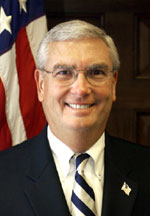
Dr. George Gray, Assistant Administrator of the U.S. Environmental Protection Agency’s Office ofResearch and Development (ORD), has named Dr. Harold “Hal” Zenick left, Director of National Health and Environmental Effects Research Laboratory (HNEERL), which is headquartered in Research Triangle Park, North Carolina. The U.S. EPA’s National Health and Environmental Effects Research Lab isthe largest of ORD's laboratories and centers and produces specializedscientific research to help protect human health and safeguard thenatural environment. NHEERL accomplishes this mission by linking thebest available science and data to the Agency’s goals of making soundpolicy decisions and setting appropriate regulatory requirements.

Dr. Zenick he has been with ORD for 22 years, recently as the acting director andpreviously the deputy director of NHEERL. He has also served as the acting ORD deputy assistan t administrator for science in Washington,D.C., and was a branch chief in EPA's Office of Health and Environmental Assessment. Prior to joining ORD, Dr. Zenick spent 13 years in academia with the Department of Environmental Health in the University of Cincinnati Medical School preceded by an appointment at New Mexico Highlands University. Dr. Zenick has a Ph.D. in physiological psychology from the University of Missouri (Columbia). For more information on the National Health and Environmental Effects Research Laboratory: http://www.blogger.com/.

Wednesday, January 03, 2007

Arlington Country Fights Global Warming

Arlington County government plans to spend $6 million to reduce greenhouse gas (GHG) emissions. They will pay rebates to residents who use clean energy. The county wants to reduce GHG emissions by 10 percent by 2012. They will spend $5 million to improve energy efficiency in public buildings, $400,000 to plant 1,200 trees, buy wind power and give away 2,000 fluorescent light bulbs.

Montgomery County has a similar program called Clean Energy Rewards where they defray up to 40 percent if they purchase renewable energy through PEPCO and Washington Gas. Montgomery County also buys 10 percent of its of its power from wind companies.

Monday, January 01, 2007

Lithium Ion Battery Compared to Nickel Metal Hydride

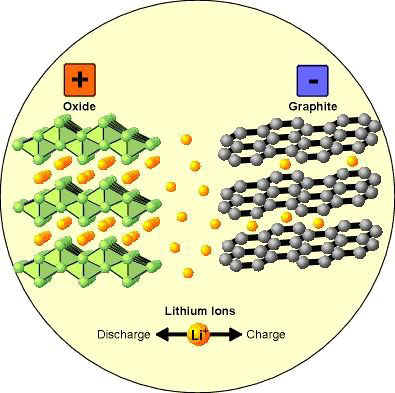
The lithium ion (Li ion) battery, left graphics, is a rechargeable battery technology introduced in 1991 that provides greater charge per pound than nickel metal hydride. In 1993, Toshiba introduced the first notebook in the U.S. with a Li-ion battery. Since then, it has become the most popular battery technology for notebooks, cellphones and other handheld devices. In contrast to nickel-based batteries that require full discharges to keep the battery healthy, lithium ion batteries are better with frequent, shallow discharges before charging again.

Lithium is the third lightest element, giving a substantial saving in weight compared to batteries using much heavier metals. lithium-ion batteries should be charged early and often. Li-ion batteries should be kept cool. Ideally they are stored in a refrigerator. Aging will take its toll much faster at high temperatures. The high temperatures found in cars cause lithium-ion batteries to degrade rapidly. Lithium-ion batteries should never be depleted to empty (0%). Lithium-ion batteries can easily rupture, ignite, or explode when exposed to high temperatures, or direct sunlight. They should not be stored in a car during hot weather. Short-circuiting a Li-ion battery can cause it to ignite or explode. Never open a Li-ion battery's casing. Li-ion batteries contain safety devices that protect the cells inside from abuse. If damaged, these can also cause the battery to ignite or explode.

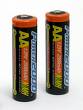
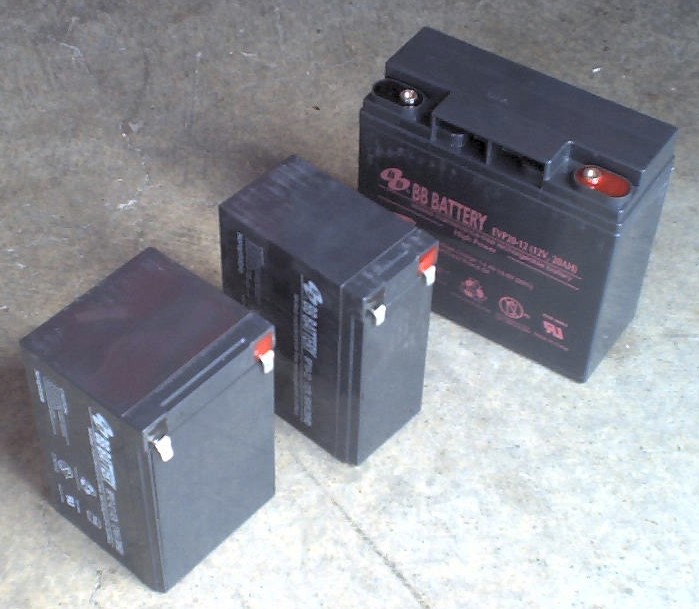
Applications of the Nickel Metal (Cadmium) Hidride (NiMH) type battery, top pictures, includes hybrid vehicles such as the Toyota Prius and consumer electronics. NiMH battery technology was invented developed at the end of the 1980's and commercialised first by Matsushita Company. (Wikipedia, Answers)

Russia Plays Hardball with Gazprom Gas Pipeline

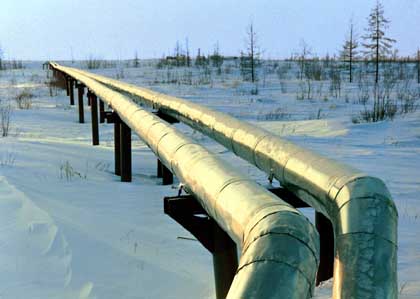
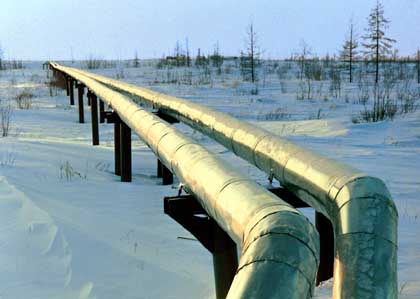
Russia is maximizing profits and manipulating foreign policy with its huge natural gas resources and massive gas pipeline system. Russia is leveraging its natural gas power with European Union countries and its former Soviet Union states. Russia has promised its investors maximum profits by raising rates. Gazprom is the world's 4th largest company.

Gazprom bought a majority stake in Shell's Sakhalin 2 liquefied natural gas development in Russia's Far East for7.25 billion. Critiecs say it was a nationalization. Mitsui & Co and Mitsubishi Corp are Shell's partners in Sakhalin 2.

Gazprom has increased prices on countries that it is at odds with, like Georgia (separatist) and Ukrain (pro-Western). It is also increasing prices on its ally Belarus. The price is being raised from $47 per 1,000 cubic meters to $105. Gazprom also wasts a 50 percent ownership stake in Belarus' national gas company, Beltransgaz. Belarus does not want the partnership. (NYT 12/30/06, Wall St Journal 1/2/07)

Russia Will Never Sign the EU Energy Charter Treaty

The European Union (EU) wants access to Asian gas via the Russian state-owned Gazprom pipeline, but Rissua does not want to give such obligatory access because it does not want its own interests compromised. Although the EU does not have any negotiating leverage over the Russians, the automatic access to Gazprom's pipeline would give them access to cheaper Asian gas, particularly from Kazakhstan and Turkmenistan. Why would Russia allow its EU customers to buy cheaper gas from a competitor?

The EU might also be operating under the myth that there is extra capacity to carry Asian gas. Of course, the EU and Russia need to negotiate some sort of provisions for a practical Energy Charter Treaty. Gazprom has the world's largest gas pipeline network.

Russian Railways

Russian Railways (RR) is a state-owned monopoly that accounts for 3.6 percent of Russia's GDP. It had $22.6 billion in sales in 2004 and operates 85,500 kilometers (53,000 miles) of track. RR has the longest stretch of electrified track in the world - 42,300 kilometers (26,000 miles).

Facts about RR: 1) 624,000 freight wagons and 19,600 freight locotives, 2) employs 1.3 million people, 3) owns nearly 1,000 enterprises and 165 subsidiaries, 4) handles 83 percent of all freight (excluding oil that travels by pipeline), 5) carries 1.3 billion passengers a year and accounts for 41 percent of Russia's passenger transport6) passenger services operate at a loss whereas freight is profitable. (Trendline Russia)

Saturday, December 30, 2006

Electric Vehicles in China

The Communist Party's Central Committee wants innovation. The Chinese people will want hundreds of millions of vehicles and in order to prevent health-killing air pollution, the need for pollution-free vehicles and renewable energy in China is clear. Mao Zongqiang is one of China抯 leading experts on hydrogen and other alternative fuels at Tsinghua University's Nuclear and New Energy Institute.

Shen-Li High Tech Co. Ltd., a private company in Shanghai, is manufacturing a hydrogen fuel cell demonstration vehicle. It wants to produce hydrogen power for buses, taxis and generators. The company started operation in 1998 and the founder and president is Hu Liqing, 43. His factory is in Shanghai's suburban Longyang Industrial Garden. The company hopes to find a way to economically mass-produce the propulsion systems. The Shen-Li company is considering a partnership with the state-owned Shanghai Automotive Industry Corp. to produce the cars, the Suzhou company would produce the buses.

A subsidiary of Fosun Pharmaceutical Corp purchased a 36 percent share of Shen-Li in 2006 and the company is now focused on electricity generators, which offer hope for more immediate sales in China and abroad.

Fuyuan Century Fuel Cell Power Co. Ltd. in suburban Beijing, headed by Zhong, 63, is researching ways to make membranes, which are the key and most expensive element in hydrogen fuel cells. DuPont, in the USA, dominates the market for these components. The Beijing city government purchased three hydrogen-powered demonstration buses from DaimlerChrysler for the 2008 Summer Olympics.

A chemical reaction in the fuel cell combines hydrogen and oxygen to produce electric current to power a vehicle and the waste emission is water vapor. Unfortunately, the problem is that producing, storing and distributing the hydrogen costs money and requires an infrastructure of filling stations that does not exist. (Wash Post)

Wednesday, December 27, 2006

Acid Rain Program Shows Continued Success

The U.S. EPA released its Acid Rain Program 2005 Progress Report, marking the 11th year of one of the most widely regarded and successful environmental programs in U.S. history. Since 1995, the program has significantly reduced acid deposition in the United States by decreasing sulfur dioxide (SO2) and nitrogen oxides (NOx) emissions. Due to rigorous emissions monitoring and allowance tracking, overall compliance with the Acid Rain Program has been consistently high at nearly 100 percent.

There were no units out of compliance in 2005. In 2005, SO2 emissions from electric power generation were more than 5.5 million tons below 1990 levels. NOx emissions were down by about 3 million tons below 1990 levels. The program's emission cuts have reduced acid deposition and improved water quality in U.S. lakes and streams.The emission reductions to date also have resulted in reduced formation of fine particles, improved air quality, and human health related benefits.

A 2005 analysis in the Journal of Environmental Management estimated the value of the program's human health and environmental benefits in the year 2010 to be $122 billion annually (2000$). Most ofthese benefits result from the prevention of air quality-related health impacts, such as premature deaths and work days missed due to illness, but they also include improved visibility in parks and other recreational and ecosystem improvements.

Issued in March 2005, the Clean Air Interstate Rule (CAIR) will build upon the Acid Rain Program to further reduce SO2 and NOx emissions. CAIR achieves large reductions of SO2 and NOx emissions across 28 eastern states and the District of Columbia. When fully implemented, CAIR will reduce SO2 emissions in these states by more than 70 percent and NOx emissions by more than 60 percent from 2003 levels.

The Acid Rain Progress report summarizes human health and environmental improvements due to the program. The report also includes sections oncompliance strategies, surface water quality monitoring, environmentaljustice, and EPA's framework for accountability.

Emission & Allowance Data & Maps

The Acid Rain Program 2005 Progress Report

Department of Energy October Short-Term Energy Outlook

The U.S. Energy Information Administration’s (EIA) October Short-Term Energy Outlook Highlights:

* Households heating primarily with electricity can expect a slight price increase this winter and the demand for electricity is likely to continue to grow through 2007.

* Prices for petroleum products and natural gas are projected to increase from their current levels, but are not expected to surpass last winter’s levels.

* Next spring’s gasoline inventories are expected to be lower than last spring’s and colder winter weather would reduce gasoline output.

* The world oil requirement is expected to increase, resulting in an increase in the demand from OPEC. OPEC is not likely to increase crude oil production.

Short-Term Energy Outlook Report

EPA Publishes Updated List for Boutique Fuels

To comply with the Energy Policy Act of 2005, EPA has published a list of "boutique fuels." This list serves as the basis for any future adoption of boutique fuels into State Implementation Plans. A boutique fuel is a unique fuel blend developed by a state or local air pollution agency and approved by EPA as part of a State Implementation Plan to support meeting national air quality standards. The list limits the number and type of different fuels used around the country.

The existence of too many fuel types in a given area may present challenges for production, distribution, and storage during periodic disruptions like refinery shutdowns and weather-related incidents. To address this issue, President Bush directed EPA Administrator StephenJohnson to convene a Boutique Fuels Task Force. A report detailing the findings from this Boutique Fuels Task Force was published in late June.

Butique Fuel List
Boutique Fuel Task Force

Tuesday, December 26, 2006

China Will Produce More Carbon Dioxide Than the USA

The International Energy Agency says China will pass the United States in 2009 as the biggest source of carbon dioxide emissions that cause global warming.

Although China has 1.4 billion people and the United States has 300 million people, the average U.S. citizen emits more carbon dioxide than the average Chinese citizen. The size of China and its economy is leading to the significant increase in carbon dioxide emissions.

Asia Carbon Dioxide Offset Trading

Asia Carbon Exchange (ACX), the world’s first CDM-focused exchange announced its first independent auction in August 2006. The auction of Certified Emissions Reductions (CER) was collectively offered from Brazil, Sri Lanka and Viet Nam. The Vietnamese project, a hydro-power plant will be commissioned in late 2008 and will fully begin to generate CERs from 2009.

The auctions helps establish a price for offsets. The Chief Operating Officer of the Asia Carbon Group believes the platform demonstrates the need for a trading system that allows for price discovery and transparency for the carbon markets to fully appreciate and mature in accordance with the key objectives of the Kyoto Protocol. This is especially relevant for the CER markets, which had evolved without a basis for price but used the EU allowance spot and futures markets.

Kyoto Protocol Will Not Work Because of USA, India and China

The USA, India and China plan to build nearly 850 new coal-fired plants, which would pump up to five times as much carbon dioxide into the atmosphere as the Kyoto Protocol aims to reduce. China, India, and the U.S. - are expected to emit as much as an extra 2.7 billion tons of carbon dioxide, whereas Kyoto countries unrealistically hope to cut their CO2 emissions by some 483 million tons. If all those power plants are online by 2012 to add an estimated 327,000 megawatts of capacity, it completely cancels out any gains from Kyoto.

China is on track to add 562 coal-fired plants - nearly half the world total of plants expected to come online in the next eight years. India could add 213 plants; the US, 72. (Christian Science Monitor)

China To Build Two Nuclear Power Plants in Weihai

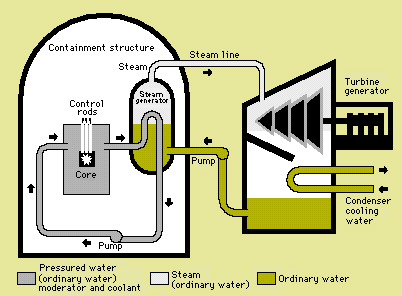
China plans to build two nuclear power plants in the coastal city of Weihai, in Shandong province, according to city officials. The two plants will be located in the Rushan and Rongcheng districts of Weihai. The projects are awaiting final approval. China will begin building a new generation 'pebble-bed' nuclear reactor in Weihai with the aim of making the technology commercially viable by 2020.

China plans to quadruple its nuclear generation by building 40 new reactors in the next 15 years. (AFX News Ltd)

Friday, December 22, 2006

HFC-23 is 12,000 Times More Potent Than Carbon Dioxide

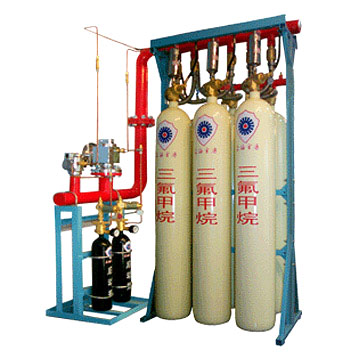
The Secretariat of the United Nations Clean Development Mechanism (CDM) estimates that a ton of trifluoromethane (HFC-23) has the same greenhouse effect as about 12,000 tons of carbon dioxide. HFC-23 is used as a refrigerant and in fire supression systems, right. The gas can be decomposed via a thermal oxidation process.

Companies in China and India are utilizing the Certified Emissions Reductions generated as a result of large-scale industrial abatement projects to generate offsets to sell through the United Nations Clean Development Mechanism under the Kyoto Protocol. Neither country is a signatory to the protocol but the CER and CDM allow developing countries to participate through a signatory country.

Nearly all HFC-23 emissions (98 percent) are created as a byproduct in the production of chlorodifluoromethane (HCFC-22) and generally are vented to the atmosphere. In some cases the HFC-23 is captured for use in a limited number of applications. The increase in HFC emissions since the early 1990s reflects the use of HFCs as replacements for CFCs (chlorofluorocarbons), HCFCs (hydrochlorofluorocarbons), halons, and other ozone-depleting substances (ODS) that are being phased out under the Montreal Protocol because they damage the Earth’s stratospheric ozone layer. HCFCs deplete ozone. HFCs do not deplete ozone. (DOE-EIA, NYT)

Thursday, December 21, 2006

Gazprom is the ExxonMobile of Russia

Gazprom (Wikipedia) is Russia's super oil and gas company. It is the biggest extractor of natural gas in the world. Other similar companies in Russia include Rosneft, Transneft, the state oil pipeline monopoly and Yukos (dismantled since filing bankruptcy). The politics around this company are complex, but it is currently state controlled.

A big controversy right now is Gazprom's insistence that Shell include it as a partner in the Sakhalin II, a joint project between Shell and Japanese companies (Wikipedia). ExxonMobile's Sakhalin I (Wikipedia) project is also being forced into partnerships with Gazprom. Russia is using environmental regulations as a way to force negotiated partnerships and increased tax revenues.

Statoil Buys Norsk Hydro & Becomes Largest Offshore Company

Statoil of Norway bought Norsk Hydro for $28 billion to become the world's largest off-shore oil company. Statoil is controlled by the Norwegian government and the combined companies will produce 1.9 million barrels a day. The combined companies have an estimated 6.3 billion barrels in oil and gas reserves.

Norway holds about half of Europe's oil and gas reserves and is the world's third largest oil exporter after Saudi Arabia and Russia. (NYT)

European Union Goes After Airlines on Carbon Dioxide

Beginning in 2011, the European Union wants to put extra charges for carbon dioxide emissions on foreign and domestic airline carriers. It is an effort to meet the requirements of the Kyoto Protocol. It is estimated that the plan will cost 2.9 billion euros ($3.8 billion) a year to buy allowances starting in 2012. The costs will be passed on to passengers and could be more than $50 per ticket depending on the destinations and offset prices.

Oil Shale: Extract by Electric Heat, Steam & Gas Injection

Shell, Chevron and EGL Resources want to pump oil out of underground oil shale by using three separate techniques: 1) Electrical Heater, 2) Hot Steam and 3) CO2 injection, respectively. Shell wants to heat shale 2,000 feet deep to 650 degrees F. Chevron wants to circulate CO2 or other gases creating a chemical reaction that will force the oil up. EGL would use a radiator system under the shale and a web of pipes to pump it out of the rock. The largest deposits of oil shale are in Colorado, Utah and Wyoming.

Government estimates put the recoverable oil from shale at 800 billion barrels, more than three times the proven reserves os Saudia Arabia. The U.S. is the Saudi Arabia of oil shale. We estimate that oil has to reamina at between $70 to $100 to justify the expense of extracting oil from shale.

The companies have the challenge of doing this without contaminating the groundwater. They must also figure out how to produce the energy needed to heat the shale without producing huge greenhouse gas emission. Maybe a small nuke plant would work. (The New York Times)

Westinghouse to Build Nuclear Power Plants in China

China and the United States have signed an agreement that supports the transfer of nuclear technology to China. Westinhouse Electric Company wants to build 4 nuclear power plants in China. The agreement was signed by China's minister for the National Development and Reform Commission and U.S. Energy Secretary Samuel Bodman.

Westinghouse wants to build facilities at Snmen in Zhejiang Province and at Yangjiang in Guangdong Province. Westinghouse wants the plants up by 2013. Westinghouse wants to build its new AP 1000 nuclear power plant. Shaw Group Inc (Westinghouse's U.S. engineering and construction services contractor) signed a companion agreement with China's State Nuclear Power Technology Co. to work out details for the contract and construction. (The Washington Post)

EPA, China & Asia Agree to Cooperate on Environment

EPA Administrator Stephen L. Johnson, left, signed a Statement of Cooperation with the Chinese State Environmental Protection Administration (SEPA) and the Asian Development Bank (ADB) in Beijing. This agreement will support the development of cap and trade mechanisms, the use of economic and market tools to address environmental issues, and the strengthening of SEPA's regional>infrastructure. China's rapid economic growth and urbanization have placed pressures on its environment. Large-scale investments will be necessary to improve air quality in major cities and towns, treat wastewater discharged into rivers and lakes, and provide safe drinking water supplies.

This trilateral collaboration leverages EPA resources and expertise to help China address environmental challenges. EPA and ADB currently have technical cooperation programs in China. In 2005, ADB approved about $1.5 billion in loans and $18.5 million in technical assistance to China. In December 2003, EPA and SEPA signed a Memorandum of Understanding that included annexes on Air Pollution, Water Pollution, and Pollution from Persistent Organic Pollutants (POPs) and other Toxic Substances. A fourth annex on Hazardous and Solid Waste was added during Administrator Johnson's first visit to China in April 2006.

Verizon To Build NEW Optical Line To China

Verizon Business is the only U.S. based business that will play a vital role in building the first next-generation undersea optical cable system directly linking the U.S. mainland and China. The Trans-Pacific Express will provide greater capacity and higher speeds to meet the dramatic increase in demand for IP, data and voice communications to the world's fastest growing region, Asia-Pacific.

It will support the equivalent of 62 million simultaneous phone calls, more than 60 times the overall capacity of the existing cable, to support future Internet growth and advanced applications such as video and e-commerce.

Saturday, December 16, 2006

Congestion: Asthma in the Electricity Transmission System

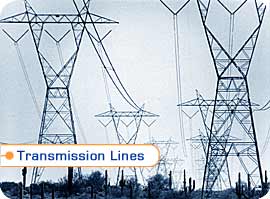
When utiltiies do not have enough electricity from their own generation they import from other utilities or merchant generators. Bottlenecks in the transmission lines prevent transmission of enough electricity and raises the price of this power for everybody (congestion charges). New transmission lines are needed but NIMBYites restrict the building of lines whenever and wherever they can. They are supported by professional environmentalists and environmental organizations.

The Department of Energy (DOE) estimates that congestion charges add $8 billion, about $40 per person, to electricity charges to about 200 million people on the Eastern grid system. Transmission lines have not been maintained and expanded to keep up with growing electricity demand. The weaknesses in the transmission system also serve as a barrier to successful deregulation. The Energy Policy Act of 2005 prevents state and local officials from blocking new lines. Provisions from this law will probably be needed by Dominion Power to build new lines across the Allegheny Mountains to serve Northern Virginia.

The Department of Energy estimates that peaking plants are now being used 40 percent of the year instaead of just during times of peak electricity use just to keep enough electrons on the grid. Another factor is that congestion charges are not broken out separately in the average residential customer's electricity bill. (New York Times)

Thursday, December 14, 2006

Dominion Virginia Power High Power Line Plans Protested

Residents protested at a December public meeting sponsored by Dominion Virginia Power to get feedback on its plans to build high power lines through Frederick Co, Warren Co, Fauquier Co and Prince William Co. The lines would run from Meadow Brook substation near Route 81 over the Blue Ridge Mountains and curving north near Haymarket towards Dulles Airport to the Loudoun substation.

The Center supports the plans for the 500,000 volt lines. Of course, the affluent communites oppose the lines based on visual impact. It is a NIMBY luxury view and does not consider the greater power needs of the region. Opponents beleive the lines will ruin the ambience of historic sites too.

Inspector General Report Says Oil Royalties Unpaid

Evidently companies operating offshore oil rigs are not pyaing billions in royalties on oil and gas from federal land and coastal waters. The report's findings:

* Since 2000, audits have declined
* The Interior Department reviews only 9 percent of all properties and 20 percent of all companies.
* The computerzied fact-checking system is inadequate.
* Government data are incomplete and inaccurate.

The eight month report was delivered as a report to Congress. (NYT)

NASA Seeks Comments on Proposed Nuke Rover on Mars

The National Aeronautics and Space Administration (NASA) has issued a Draft Environmental Impact Statement(DEIS) for public comment on its proposed Mars Science Laboratory (MSL) Mission to explore the surface of Mars using a mobile science laboratory (rover) to acquire detailed information on the habitability of Mars for life forms.

The DEIS addresses alternative and the potential environmentali impacts associated with preparations for and implementation of the proposed mission. NASA's proposed action, Alternative 1, would use a radioisotope power source consisting of plutonium (Pu-238) dioxide. Alternative 2 would use a solar array to provide power for the rover. The DEIS also discusses the No Action alternative.

Congress Approves Nuclear Power Assistance for India

Before Congress adjourned on Dec 9 they passed legislation to assistance India with civilian nuclear power production, even though such assistance is banned under the Nuclear Nonproliferation Treaty (NPT) that for nonnuclear nations that build nuclear weapons. India pursued nuclear weapons before seeking assistance from the U.S. under NPT.

Normally, the U.S. seeks to use the NPT as an incentive for nonnuclear weapons nations to pursue civilian nuclear power by agreeing to inspections of their facilities in exchange for civilian nuclear power assistance and an agreement not to build nuclear weapons. This principle has been stood on its head with India.

McKinsey Report Predicts Global Energy Usage

According to the McKinsey Global Institute, to date, the global debate about energy has focused too narrowly on curbing demand. Instead, the best way to meet the challenge of growing global energy demand may be to focus on energy productivity, which reconciles both demand abatement and energy-efficiency. According to the report, global energy demand will grow more quickly over the next 15 years than it has in the last 15. Demand could grow at a rate of 2.2 percent per year, boosted by developing countries and consumer-driven segments of developed economies. This acceleration will take place despite global energy productivity continuing to improve by 1.0 percent a year.

The McKinsey report states that no strategy can control the growth in energy consumption unless it includes developing countries. An estimated 13 percent of the growth in global energy demand between now and 2020 will come from new Chinese power plants, with Chinese vehicles and buildings adding to the load.

Congress Passes Revision of Magnuson-Stevens Act

Congress passed reauthorization of the Magnuson-Stevens Act before it adjourned on Dec 9. The bill reauthorizes the act through 2013. President Bush released the Ocean Action Plan in 2004 as his effort to make our oceans, coasts, and lakes cleaner, healthier, and more productive. President Bush also established the Northwestern Hawaiian Islands Marine National Monument, the largest single conservation area in the history of the U.S. and the largest protected marine area in the world. Enactment of a stronger Magnuson-Stevens Act was one of the top priorities of the Ocean Action Plan. The revised law seeks to:

* End overfishing of depleted species

* Establish a selling and trading of shares in a fishery to promote conservation

* Empower fishery scientists, not the fishing industry, to set fishing levels;
studying and protect deep sea corals; and

* Allows the U.S. to sanctions countries practicing illegal pirate fishing internationally.

The law also increased summer catch limits for New England flounder. The cap-and-trade program is unique and mirrors the same sort of approach in 1990 Clean Air Act Amendments Acid Rain Program. The 30-year-old law is the main legislation regulating fishery management in ocean waters between 3 miles and 200 miles offshore. S. 2012 & H.R. 5018, the American Fisheries Management and Marine Life Protection Act, sponsored by Chairman Richard W. Pombo (R-Calif.), Rep. Barney Frank (D-Mass.) and Rep. Don Young (R-Alaska)

Monday, December 04, 2006

Yucca Mountain Supplemental Environmental EIS

The U.S. Department of Energy (DOE) held a Supplemental Yucca Mountain Repository Environmental Impact Statement (EIS) public scoping meeting in Washington, DC at L'Enfant Plaza Hotel on Oct 30, 2006. The meeting was to help determine the scope of the SEIS, which will address current repository design and associated operational plans.

Since publication of the Yucca Mountain Final Repository EIS in 2002, DOE has continued to develop the repository design and associated operational plans. The comment period closed on Nov 27, 2006. Additional information can be requested at www.ocrwm.doe.gov