Friday, November 17, 2006

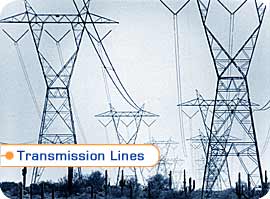
Dominion Virginia Power Having Trouble Siting Power Lines

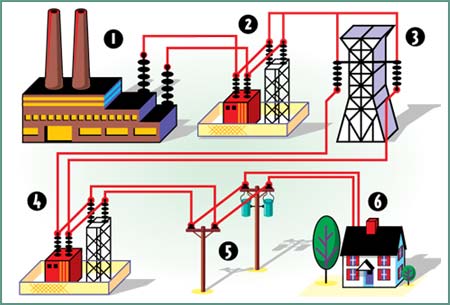
The utiltiy dropped plans to run a high power line through most of Loudoun County. There are very rich and powerful people there so it is no wonder. People are such hypocrites when it comes to energy. They want to use as much as they can but do not want to be inconvenienced by even the mere sight of a tower and lines.

Dominion is planning to use the I-66 right of way but the rich horse country citizens will make it virtually impossible to build the lines anywhere. They will fund the obstructionist environmental groups to block it every else as an encroachment on scenic views. Yet all of these people probably live in large homes that gobble electricity. They probably have multiple televisions, computers and other appliances. They probably have 50 incandescent light bulbs too. Such illogical hypocricy must be challenged and overcome for the good ot the greater society.

Tuesday, November 14, 2006

G.E. & Hitachi Will Merge Nuclear Divisions

The two companies will merge to compete with Westinghouse (owned by Toshiba & Areva) to build the new but yet built economic simplified boiling water reactor and advanced boiling water reactor.

Hitachi will take a 40% ownership share of G.E. and Hitachi will take a 20% share of Hitachi's nuclear business. (NYT)

Friday, November 10, 2006

Robert Samuelson Is A Global Warming Genius

The Washington Post columnist is so dead on in his article, "Greenhouse Guessing," that it is scary. At first we thought he had lost his mind by criticizing the current Stern Report. But by the end of the article, you had to agree that Samuelson nailed it. Nailed fairly, squarely and scientifically.

Samuelson acknowledges global warming and agrees that something needs to be done about it. He rejects Stern's notions though that you can measure the precise economic effects based on what 'might' happen. Samuelson writes, "No one knows what [global warming's effect] might be, because we don't know how much people might adapt....Unless we develop cost-effective technologies that break the link between carbon dioxide emissions and energy use, we can't do much." Smauelson gets it.

Tuesday, November 07, 2006

Constellation & Areva Promote Nuclear Power

Constellation Energy Group and Areva formed a joint venture in 2005, Unistar Nuclear, to build new nuclear power plants. Unistar is considering building new nuclear plants at Calvert Cliffs, Maryland and Nine Mile Point in New York.

Areva is a Bethesda based subsidiary of French nuclear power services Areva Group. Constellation is based in Baltimore, Maryland. The new UniStar Nuclear is based in Annapolis, Maryland.

Monday, November 06, 2006

Kyoto Protocol Joint Implementation Mechanism

The United Nations Framework Convention on Climate Change (UNFCCC) has launched a new mechanism of the Kyoto Protocol expected to generate significant reductions in greenhouse gas emissions which cause global warming. With the launch of the Kyoto Protocol’s joint implementation (JI) mechanism, developed countries will be able to acquire carbon credits from greenhouse gas emission reducing projects undertaken in other industrialized countries, in particular central and eastern European transition economies.

These tradable carbon credits can then be used to meet emission reduction or limitation commitments under the Kyoto Protocol. JI will generate real projects which will help green the economies of central and eastern Europe. With its launch, we can expect emission reductions in the order of several hundred million tonnes of CO2 by the end of the first commitment period of the Kyoto Protocol. The JI is similar to the Kyoto Protocol’s clean development mechanism (CDM), which permits industrialized countries to invest in sustainable development projects in developing countries, and thereby generate tradable emission credits.

While smaller in terms of its emissions reduction potential, it is an equivalent to the CDM with regard to cooperation among countries that have targets under the Kyoto Protocol and a credible alternative to the much-feared ‘hot air.' ‘Hot air’ refers to the concern that some countries will have excess emission allowances under the Kyoto Protocol without undertaking specific efforts to reduce emissions and that they could then flood the carbon market by selling them at lower price, reducing the incentive for other countries to cut emissions.

The Kyoto Protocol presently requires 35 industrialized countries and the European Community to reduce greenhouse gas emissions by an average of 5% below 1990 levels in its first commitment period between 2008 and 2012.

Mailing Address: CLIMATE CHANGE SECRETARIAT (UNFCCC), P.O. Box 260 124, D-53153 Bonn, Germany Office Location: Haus Carstanjen, Martin-Luther-King-Strasse 8, D-53175 Bonn, Germany Media Information Office: (49-228) 815-1005 Fax: (49-228) 815-1999 Web: http://unfccc.int

Friday, November 03, 2006

Our Carbon Mercantile Exchange Is Open for Business

The Center for Environment, Commerce & Energy (the Center) has opened an emissions trading service with carbon dioxide as the main commodity. The Carbon Mercantile Exchange (CMX) is a service that allows clients to trade carbon dioxide, methane, sulfur dioxide, nitrogen oxides, and mercury. Customers can reduce their "emission footprint," the total emissions created by driving, flying, usnig electricity and other activities. CMX is easy to use and fully transparent. All transactions are open for public review. The CMX is a free on-line emissions offset clearinghouse service.

CMX can be used to complement other emissions offset programs. Our mission is to promote verifiable reductions in greenhouse and smog-forming gases. The service is open to everyone. It is a market-based system that will rely on the goodwill of the participants to conduct honest trades. The service is a dynamic portal that will serve as a gateway for innovative emissions reductions. CMX is one part of a global effort to reduce global climate change and smog in our cities.

Wednesday, October 25, 2006

Constellation Cancels Sale To Florida Power & Light

Baltimore-based Constellation Energy Group has terminated its proposed $10.8 billion sale to FPL Group because uncertainty over regulatory and legal issues in Maryland. The ratepayers of Maryland have been hurt by this cancellation. Size matters in the 21st Century utility sector. The sale would have created one of the largest utility companies in America. Now Constellation will have to fend for itself in compettive utility waters. The Maryland Legislature should be ashamed of itself for creating this debacle. Maryland ratepayers will pay for their folly. Are you listening Mike Miller?

FPL Group derives most of its revenue from its utility subsidiary, Florida Power and Light. Constellation operates Baltimore Gas and Electric. The deal was delayed by legislation passed during a special summer session of the Maryland General Assembly focusing on increased electric rates. The Maryland Court of Appeals ruled that the legislature wrongly fired the five members of the Public Service Commission. It let stand a measure barring the sitting commission from approving the merger. (Wash Post)

Tuesday, October 24, 2006

NERC Report Says Electricity Systems In Big Trouble

According to the North American Electric Reliability Council (NERC), North America's electricity system will decline unless changes are made soon. This is NERC's first reliability assessment since being named the Electric Reliability Organization (ERO) for the U.S. NERC's 2006 Long-Term Reliability Assessment Report analyzes the adequacy of electricity supply and transmission reliability in North America through 2015, and calls for actions to improve bulk power system reliability.

Demand for electricity is expected to increase over the next 10 years by 19 percent in the U.S., but confirmed power capacity will increase by only 6 percent. The transmission system requires additional investment to address reliability issues and economic impacts. The NERC report identifies 22 necessary actions that encompass all areas of the bulk power system including generation, transmission, fuel supply and delivery, and demand response. Specific recommended actions include:
* Addition of power generation facilities;
* New and upgraded transmission facilities;
* Stronger contracts and other arrangements;
* More "demand-side" measures; and
* Addressing aging workforce issues in the electric industry.

Monday, October 23, 2006

Coal Is Not Going Anywhere

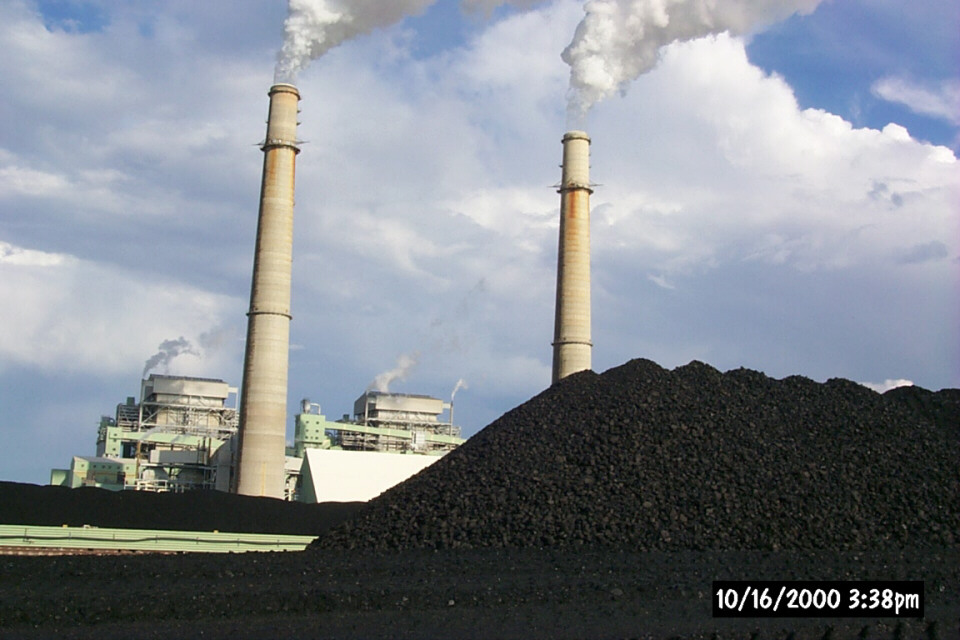
All of the talk about global warming has not stopped or even slowed down the coal-fired power plant industry. They plan to build coal-fired plants just as fast as they can. A new report documents that growth: "Tracking New Coal-Fired Power Plants: Coal's Resurgence in Electric Power Generation."

The report projects 154 additional coal-fired power plants costing $137 billion to fuel 93 million homes by 2030. It gives the proposed new plants, capacity and investments by state.

Google Goes Solar

Google plans to provide 30 percent of the electricity for its Mountain View headquarters complex in California with solar power. That sounds like a reasonable target because photovoltaics have a 30 percent capacity factor. The system will use 9,200 solar cells, which could power 1,000 homes. Google is not disclosing the purchase price (photovoltaics are expensive) but estimates are around $10 million with a 5 to 10 year payback. The system is being installed by Pasadena, Calif-based El Solutions, a division of Energy Innovations.

Google will still use power from the grid provided by Pacific Gas & Electric. That is the central weakness of Photovoltaic system - - they still need grid back up. (NYT)

Wednesday, October 18, 2006

We Love Our Oil in America (Everywhere Else Too)

Op-Ed Columnist Robert J. Samuelson is being wasted at The Washington Post. He should be running The Nature Conservancy or ExxonMobile. He gets the energy picture in relation to American pursuits of happiness.

He opens with, "Our main energy problem is our huge dependence on imported oil." He closes with, "Because Americans want painless salvation, our politicians proffer visions that promise just that." The information in the rest of the article (linked above) is quite informative for the casual reader.

Wednesday, October 11, 2006

Constellation Sells Six Natural Gas-Fired Power Plants

Constellation Energy Group Inc. agreed to sell six power plants to Tenaska Power Fund LP for $1.64 billion in cash. Constellation, the parent of Baltimore Gas & Electric estimates it will net $1.5 billion and record a one-time gain of $245 million. The gas-fired plants to be sold generate 3,145 megawatts of power. The plants include:
1) High Desert plant in Victorville, Calif.;
2) Rio Nogales plant in Seguin, Texas;
3) Holland Energy in Shelby Co., Ill.;
4) Big Sandy in Neal, W.Va.;
5) University Park in Chicago, Ill.;
6) Wolf Hills in Bristol, Va.

The plants helps Constellation improve its balance sheet. The gas-fired plants did not help the competitive supply portfolio or efficiencies of the baseload coal and nuclear plants. (AP, Examiner)

Thursday, October 05, 2006

BP & Shell Pay Violations of $1.5 Million for Unhealthy Gas

EPA reached settlements on Sept. 27 with BP Products and Shell, and two Shell subsidiaries Motiva and Equilon Enterprises LLC for threatening public health by producing noncompliant gasoline. EPA sets gasoline and diesel fuel standards under the Clean Air Act to reduce air pollutants such as smog, carbon monoxide and air toxics from motor vehicles. The companies, however, produced and distributed gasoline that failed to meet the regulatory requirements.

Use of noncomplying fuel in motor vehicles can cause an increase in emissions that can significantly harm public health. The settlements resolve violations of various fuel standards that occurred from 1999 through 2004 at retail outlets, terminals and refineries located throughout the U.S. A number of the violations involve the summertime gasoline standard for volatility, or tendency to evaporate, which is intended to reduce smog-causing hydrocarbon emissions. Some of the violations were self-reported by BP and Shell, while others were discovered through EPA's inspection and compliance programs.

BP agreed to pay a civil penalty of $900,000 and Shell agreed to pay a civil penalty of $600,000. BP and Shell will also perform extensive remedial efforts -- including quality assurance programs and technical changes in processes and equipment -- to correct the alleged violations and to prevent the recurrence of similar violations. (Source: EPA)

Wednesday, September 27, 2006

Google Promotes Electrical Efficiency in Computers

Google founders Larry Page and Sergey Brin say that deploying correct power supplies in 100 million desktop PC's running eight hours a day could save 40 billon kilowatt-hours over three years, or more than $5 billion at California's energy rates. The Google white paper, "High-Efficiency Power Supplies for Home Computers and Servers," was written by Urs Holzle and William Weihl and describes their findings.

Currently and historically, power supplies have been provided by converting high-voltage alternating current to low-voltage direct current to provide multiple output voltage. These multi-voltage power supplies are not needed in today's PC's. Google wants a single 12-volt standard with an 80 percent efficiency standard. Current efficiencies vary from 20 percent to 80 percent. The motherboard would still convert the voltage, but it would be easieer to achieve efficiencies. A company called Ecos Consulting and a group of utiity companies have been measuring computer electricity use. (New York Times)

Mag Lev Accident in Germany Kills 25

A mag lev in Germany traveling at 125 miles an hour hit a service vehicle left on the track and 25 people were killed. This unfortunate tragedy will not stop the development of this unique technology. Magnetic levitation trains have no wheels or axles and work by inducing opposite magnetic forces in the train and track to make the train hover and propel it at speeds up to 280 miles per hour. They are expensive to build and operate though. The only commercial use of the train is in Shangai, China. That line, completed in 2004, is 20 miles long and runs from Pudog International Airport to Shanghai in eight minutes.

The German train runs as a demonstration about four times per week between Doerpen and Lathen near the Dutch border. The demonstration is to show off German technology. The train was manufactured by Transrapid International, a joint company of Siemens AG and ThyssenKrupp AG. The track is operated by Munich-based IABG.

Contaminated Ground Zero Deutsche Bank Demolition

The demolition of the Deutsche Bank tower, dark building in middle at left, has turned into a big problem. Local EPA inspectors have questioned the safety of the state's proposed deconstruction methods. The plan is to take the building apart piece by piece instead of by implosion or wrecking ball. The nearby neighborhood is concerned about being contaminated by the toxic Gound Zero dust still saturating the inside of the building.

There is an urgency to get this building at 130 Liberty Street down because construction has begun on the Freedom Tower. Published reports are citing concerns that the Pataki administration is trying to get standards lowered so that they can proceed with deconstruction. Of course, everyone is mum about such discussions. Regardless, the building will have to come down sooner or later. Hopefully, bureaucracy will not compromise the health of those nearby and the space will be made available for development soon.

Thursday, September 21, 2006

E. Coli Tainted Spinach Killing People & Spinach Market

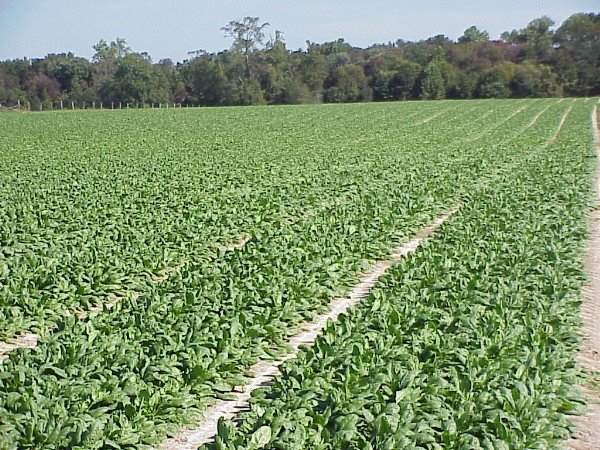
Cattle manure with the E. coli bacterium O157: H7 saturated in ground and surface waters is probably the source of the contamination on spinach. Such water used to irrigate the spinach would contaminate it.

With one confirmed death and sickness rising in the hundreds, it is being reported that the multibillion dollar agricultural sector could lose hundreds of millions of dollars due to spinach market losses. Authorities are trying to locate and isolate the source of the E. Coli and supermarkets have already removed all spinach from its shelves. It appears that the E. coli appeared in a bag of spinach in New Mexico. It is being reported that the outbreaks have now reached 31 states. The Food and Drug Administration is continuing its investigation. (Wash Post article)

Normal E. coli is usually harmless as a bacterium in our and animal digestive systems. The acid in our stomachs is strong enough to kill the bacterium. E. coli O157: H7 is the one killing people because our stomach acid is not strong enough to kill it, thus the abdominal cramps, diarrhea, fever and sometimes fatal kidney failure. A grain diet instead of a hay diet is more conducive to the production of O157: H7 E. coli. (New York Times)

Bush Administration Releases Climate Change Plan

The plan is available at "Climate Change Technology Program Strategic Plan." The Bush administration does not need to be sensitive about its climate change reputation because the Energy Policy Act of 2005 is the best policy tool developed by any nation to date to fight greenhouse gas emissions. The supports to renew nuclear power plant building is the best thing that has happened to help Earth's atmosphere. (Washington Post article)

Judge Blocks Bush Rule to Open Nat'l Forest Logging

California federal Magistrate Judge Elizabeth D. Laporte has set-aside a U.S. Forest service rule that allows governors to decide which land in national forests is suited for logging and mining. Judge Laporte ruled that the Bush elimination of a major program requires an environmental impact statement. The ruling does not affect Alaska's Tsongass National Forest. Aren't forest products renewable resources? There shouldn't be any roads through national forests?

The ruling is a de facto reinstatement of the Clinton "Roadless Rule," which put significant national forest acreage off limits to development. Of course, the U.S. Department of Agriculture (USDA) has authority over America's forest products and has a similar Bush forest rule. (Washington Post article)

Tuesday, September 19, 2006

Google Starts Innovative Foundation

Google founders, Sergey Brin & Larry E. Page have set up a philanthropy that will help the world. It is called Google.org and they intend to help innovative people and organizations.

We are excited by reports they are consulting with hybrid-engine scientists and automakers and intend to purchase a small fleet of cars with plans to convert the engines so the cars will get 100 miles per gallon. They also plan to develop an ultra-fuel-efficient plug-in hybrid car engine that will run on ethanol, electricity and gasoline. They should work with utilities and put their energies into commercializing a plug-in, fuel cell hybrid electric vehicle that will run on fuel cell, battery and regenerative braking produced electricity.

Monday, September 18, 2006

A Review of the Book "Bluebells and Nuclear Energy"

Albert B. Reynolds has an excellent educational book on nuclear power, "Bluebells and Nuclear Energy." We recommond it to anyone interested in learning more about the technology. It is written in an easy to understand style, yet it is technical enough to provide any reader with an education on how fission power works. He has great sections on nuclear radiation, history of fission, a description of current power plants, new designs, disposal of nuclear waste, comparison of risks, fusion and a brief section on nuclear weapons.

Bluebells are his favorite wildflower. He compares the blue of the bluebells with the blue glow of the water in "swimming pool" (research) reactors and spent fuel storage pools. ("You cannot see it at a power reactor because the reactor is in a vessel that is in the containment where you cannot go"). If you want to learn about nuclear power, this is an excellent book. Rush out and buy it today and read it over and over. Albert B. Reynolds studied under and worked with top nuclear pioneers and was a Professor of Nuclear Engineering at the University of Virginia, among other positions. He is now retired. Email the author: hareyn@aol.com

For information on purchasing the book, address the publisher:
Cogito Books
(Medical Physics Publishing)
4513 Vernon Blvd.
Madison, WI 53705

Friday, September 15, 2006

Governor Ehrlich Wins Court Decision on PSC

The Maryland Court of Appeals restored Public Service Commission (PSC) members to office ruling (9-14-06) that the change was unconstitutional and only the governor has the power to remove commission members. The court ruled that lawmakers improperly usurped the governor's powers when they disbanded the regulatory body. After the PSC approved a 72% electricity rate increase, the legislature voted to disband the commission and limit the governor's power to fill the newly created vacancies. When Governor Bob Ehrlich vetoed the bill, the legislature overrode the veto and Commission Chairman Kenneth D. Schisler sued to overturn the new law.

The court had no problem with the legislature temporarily changing the method of appointment to increase its influence in filling vacancies. Previously, the commission's five members were chosen by the governor and confirmed by the Senate. The bill passed in June allowed Ehrlich to choose new members only from a list of names drawn up by legislative leaders. That provision remains intact. The court basically ruled that the legislature could not fire the governor appointed PSC. The court was also critical of the lack of due process standards by the legislative firing.

Tuesday, September 12, 2006

Interior Department Rejects Fission Waste on Reservation

The Department of the Interior (DOI) has blocked an interim nuclear waste storage facility on the Goshute Indian Reservation, 50 miles west of Salt Lake City, Utah. DOI is blocking the facility because they believe it will be a permanent, instead of interim, repository. DOI doubts Yucca Mountain, the official permanent repository, will ever be completed in Nevada. The Nuclear Regulatory Commission (NRC) granted a 25-year operating license to Private Fuel Storage, a consortium of eight utilities at the beginning of this year. The waste would be stored aboveground in casks, above left, on 800 acres on the reservation.

The Interior Department considers itself to be acting as a “prudent” trustee of Indian lands, or a well-meaning overseer for the evidently viewed as hapless Skull Valley Goshute Indians. Although divided, the Goshute approved this project. DOI is thwarting their will and violating their sovereignty. The division revolves around jobs and sovereignty versus respecting Mother Earth. Many non-Indians, including elected officials, oppose the interim repository, possibly because their share of the income was insufficient.

Offshore Oil Leases & the Outer Continental Shelf

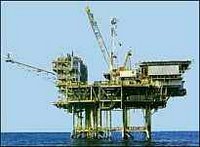
The Outer Continental Shelf (OCS) is a big source of oil and gas. All offshore oil and gas wells supply approximately 25 % of the country’s natural gas production and approximately 30 % of total domestic oil production. The Department of the Interior (DOI) Mineral Management Service (MMS) estimates of oil and gas resources in undiscovered fields on the OCS total 76 billion barrels of oil and 406.1 trillion cubic feet of gas. These volumes represent about 60 percent of the oil and 41 percent of the natural gas resources estimated to be contained in remaining undiscovered fields in the United States.

The OCS Lands Act requires the DOI to prepare a 5-year program that specifies the size, timing and location of areas to be assessed for Federal offshore natural gas and oil leasing. It is the role of DOI to ensure that the U.S. government receives fair market value for acreage made available for leasing and that any oil and gas activities conserve resources, operate safely, and take maximum steps to protect the environment. OCS oil and gas lease sales are held on an area-wide basis with annual sales in the Central and Western Gulf of Mexico with less frequent sales held in the Eastern Gulf of Mexico and offshore Alaska. The program operates along all the coasts of the U.S. - with oil and gas production occurring on the Gulf of Mexico, Pacific and Alaska OCS.

The term United Nations Convention on Law of the Sea (UNCLOS, also called simply the Law of the Sea or LOS) provided new universal legal controls for the management of marine natural resources and the control of pollution. LOS opened for signature - December 10, 1982 and entered into force - November 16, 1994. The U.S. has signed but not codified the treaty. The Third United Nations Conference on Law of the Sea (UNCLOS III) set the limit of various areas, measured from a carefully defined baseline, as follows:

Internal waters
Covers all water and waterways on the landward side of the baseline. Foreign vessels have no right of passage within internal waters.
Territorial waters
Out to 12 nautical miles from the baseline, the coastal state is free to set laws, regulate any use, and use any resource.
Contiguous zone
Beyond the 12 nautical mile limit there was a further 12 nautical miles or 24 nautical miles from the territorial sea baselines limit, the "contiguous zone", in which area a state could continue to enforce laws regarding activities such as smuggling or illegal immigration.
Exclusive economic zones
Extends 200 nautical miles from the baseline. Within this area, the coastal nation has sole exploitation rights over all natural resources.
Archipelagic waters
A baseline is drawn between the outermost points of the outermost islands. All waters inside this baseline is described as Archipelagic Waters and are included as part of the state's territory and territorial waters.
Landlocked states are given a right of access to and from the sea, without taxation of traffic through transit states.
(Sources: MMS, Wikipedia)
Monday, September 11, 2006

Support Dominion Power High Voltage Power Lines

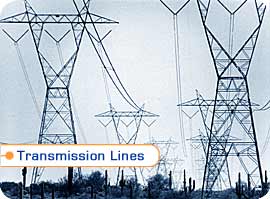
Dominion Virginia Power, based in Richmond, Virginia, applied to the Virginia State Corporation Commission (SCC) on Sept 6 for permission to build a substation and five-mile-long power line in a fast-growing area of Stafford County. If approved, the 230,000-volt transmission line would be built entirely on an existing right-of-way, linking a transmission line east of U.S. Route 1 and a proposed new substation near Garrisonville. The $13.5 million project needs to be in service by the summer of 2009 to meet the demand for electricity in the Garrisonville area, which is growing by 3 percent to 5 percent each year. Garrisonville is on the edge of Northern Virginia and along Interstate 95, about 30 miles south of Washington, D.C. The SCC, which is responsible for approving transmission power lines in Virginia, will set a schedule for public meetings and hearings.

Dominion is also planning another 500,00 volt electricity line to serve Northern Virginia that will run across parts of Prince William, Fauquier and Loudoun counties. It would be part of a 240-mile line from southwestern Pennsylvania and would connect to a substation near the Loudoun village of Aldie. The line will serve 275,000 homes and reduce stress on the entire mid-Atlantic electricity system. Traditional environmental and conservation groups are predictably opposing the project, although they have no practical alternative. The 100-mile line could receive "national interest" designation, which would allow the utility to by-pass state and local agencies. Dominion probably wants to get state and local support if it can. However, they have a fidiciary responsibility to provide power to their customers.

Dominion is one of the nation's largest producers of energy, with a portfolio of about 28,000 megawatts of generation, about 6.3 trillion cubic feet equivalent of proved natural gas reserves and 7,800 miles of natural gas transmission pipeline. Dominion also operates one of the nation's largest underground natural gas storage systems with about 950 billion cubic feet of storage capacity and serves retail energy customers in ten states. (Washington Post article)

Waldorf-Astoria Facade Needs to be Cleaned

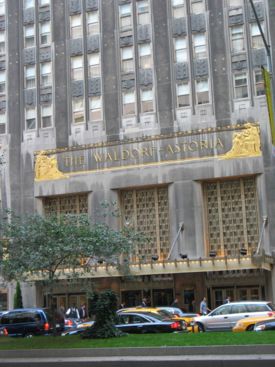
Built in 1931 and located at 301 Park Avenue (between 49th & 50th Streets), the Waldorf-Astoria facade is a pitiful sight. It is covered with a film of soot particles probably cooked into the cement facade with heat and soaked in with acid rain. It looks horrible. The status associated with the name probably maintains profits and the location near Rockefeller Plaza and other midtown attractions make it an attractive destination. However, management knows what we are saying is true and they should sandblast it or put on a new metal facade.

We would be happy to assist them with the project if they are reluctant to improve their image. There might be other, newer locations, but just as Beverly Hills represents class in Hollywood, the Waldorf-Astoria represents class in New York. The difference is that Beverly Hills still look immaculate and the Waldorf-Astoria looks run down. The facade makes it look like a seedy motel somewhere in New Jersey. Come on. Get the sandblaster out and bring back the charm.

Saturday, September 09, 2006

Huge New Chevron Oil Find in Gulf of Mexico

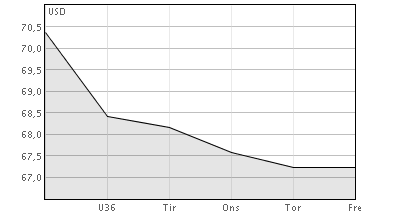
Oil prices have dropped from a high of $78 per barrel to $66 today. We continually predict these drops to our expert colleagues, but they alwasys believe prices will remain high. The Center believes America runs best on a price of $2-$3 per gallon for regular unleaded gasoline. Idealists get excited when the price of oil goes way up. When we tell them it will not stay there because politicians will take profits via a windfall profits tax or some other interventionist mechanism, they scoff and proclaim 'peak oil.' Oil companies know politicians will share any oil price pain, so they periodically raise and lower prices to maximize profit margins needed to satisfy investors and for investments in oil exploration and delivery. So the tar sands and oil shale projects always get delayed. But it is good to know they are there. It just takes a price of over $70 per barrel to make it profitable to exploit synthetic coal, shale and tar sand fuels.

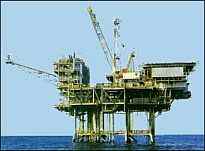
The big Chevron Jack #2 deepwater well in the Gulf of Mexico is an historic find. Tapped about 5 miles (7,000 ft of water & 21,000 ft below sea floor) beneath the Gulf surface, the $100 million project is projected to produce 3 billion to 15 billion barrels of oil and natural gas. The well is 270 miles southwest of New Orleans and 175 miles offshore. The U.S. uses about 7.5 billion barrels of oil per year with more than half of that imported.

The find by Chevron, Devon Energy and StatOil will increase pressure to pass a conference committee report on the House and Senate approved offshore drilling bills. The Senate bill passed 71-25 Aug 1 and opens 8.3 million acres in the Gulf of Mexico, tripling the current drilling area off the Alabama coast near the Florida panhandle. The Senate measure gives 37.5% of annual oil production royalties to Louisiana, Mississippi, Texas and Alabama. The House bill passed 232-187, lifts the federal ban on offshore exploration off the East and West coasts and gives 50-70% royalties. Drilling would be allowed beyond 100 miles from shore and between 50-100 miles if state legislatures approve. States could grant exemptions to drill within 50 miles.
(Chart: Offshore 247.com)

Tuesday, September 05, 2006

New Book on Health, Poverty & Environment in Asia

The new book, "Poverty, Health, and Ecosystems: Experience from Asia," highlights the challenges faced by these poor and often resource dependent households across Asia in 16 case studies. The majority of Asia's poor live in rural areas where ecosystems they depend on - water bodies, grasslands, soils and forests - are facing strains from unsustainable exploitation, according to a new publication launched by ADB and the World Conservation Union. Roughly one billion Asians still live in severe povery and suffer disproportionately from the health risks caused by inadequate or dirty water and polluted air. The poor bear the burden of collecting the resources for their daily use, such as water and fuelwood.

The case studies include analyses of pressures facing agricultural systems in People's Republic of China (PRC), India, and Pakistan. They also cover examples of links between households or communities and freshwater or marine aquatic ecosystems in Bangladesh, PRC, India, Lao People's Democratic Republic, and Sri Lanka. A case from Mongolia examines the relationships between grassland ecosystems as a source of pastures for livestock, while cases from Nepal and the PRC document how the poor rely on forests for fodder, medicines, fuel wood, and other products. One study looks regionally at the complex linkages between gender, poverty, and environment, while other cases from the highlands of Viet Nam, tribal groups in Orissa, India, and in Yunnan Province of the PRC illustrate how ethnic minorities are not only among the most poor and marginalized but also among the most natural resource dependent. Hat Tip: ">Ron Taylor

Nuclear Fuel Management and Disposal Act

Senate Energy & Natural Resources Committee Chairman Pete Domenici (R-NM) understands the serious need to build new nuclear power plants. He and Center President Norris McDonald, at Yucca Mountain-left, also understand how important it is to solve the waste problem. A summary of his bill that addresses nuclear waste is below:

Nuclear Fuel Management and Disposal Act (S. 2589)

1) Withdraws specified land from all forms of entry, appropriation, and disposal under the public land laws.
2) Transfers to the Secretary of Energy (Secretary) the land covered by such withdrawal that is under the jurisdiction of the Secretary concerned (the Secretary of the Air Force, or the Secretary of the Interior, depending upon the specific lands).
3) Reserves the land covered by the withdrawal for use by the Secretary for specified activities associated with the disposal of high-level radioactive waste and spent nuclear fuel.
4) Revokes Public Land Order 6802 of September 25, 1990, and a certain right-of-way reservation.
5) Subjects the use of the land covered by the withdrawal to conditions the Secretary deems necessary to conduct activities related to the Yucca Mountain Project.
6) Amends the Nuclear Waste Policy Act of 1982 governing Yucca Mountain site application procedures to provide that an application for construction authorization shall not be required to contain information relating to any surface facility other than those necessary for initial operation of the repository.
7) Revises requirements governing Nuclear Regulatory Commission (NRC) actions on construction applications and infrastructure activities.
8) Includes infrastructure activities within the scope of expedited authorizations.
9) Prohibits surface or subsurface mining or oil or gas production, including slant drilling from outside the boundaries of the land covered by the withdrawal.
10) Declares specified federal, state, or local regulatory requirements inapplicable to: (1) material owned by the Secretary that is transported or stored in an NRC-certified container for transportation or storage; or (2) material located at the Yucca Mountain site for disposal, if its management and disposal is subject to an NRC license.
11) Prohibits a state or local governmental entity from issuing, administering, or enforcing a new or existing air quality permit or requirement affecting a federal facility or activity subject to the Nuclear Waste Policy Act of 1982.
12) Authorizes the Secretary to determine the extent to which certain transportation regulated under the Hazardous Materials Transportation Authorization Act of 1994 shall instead be regulated exclusively under the Atomic Energy Act of 1954.
13) Deems the use of water from any source to implement this Act to be: (1) beneficial to interstate commerce; and (2) non-detrimental to the public interest.
14) Requires the NRC, in deciding whether to permit the construction or operation of a nuclear reactor or any related facilities, to deem that sufficient capacity will be available in a timely manner to dispose of the spent nuclear fuel and high-level radioactive waste resulting from the operation of the reactor and related facilities.

Monday, September 04, 2006

Steve Irwin : In Memoriam

Australian Naturalist and TV personality Steve Irwin died on Sunday in an unusual attack by a stingray. He is best known as "The Crocodile Hunter," and will be remembered as a hyperactive wildlife entertainer engaging in daring stunts with wide-eyed enthusiasm. His shows appeared in over 30 countries around the world. In 2002, Irwin and his wife, Terri, took their act to the big screen with the film, "Crocodile Hunter: Collision Course." The Irwins also managed the running of their wildlife park, Australia Zoo. (Washington Post Article)